You want to know what the four suits in a tarot deck actually stand for, not just a keyword you half remember. The tarot suits meaning breaks down to four honest lenses on a question: wands for drive, cups for feeling, swords for thought, and pentacles for the material world. Learn which lens a card belongs to and the fifty-six minor arcana cards stop feeling like strangers. They start reading like four family stories, fourteen chapters each.
This is a deep look at the suits themselves, not a full minor arcana overview. For every card's individual meaning, pair this with tarot card meanings. For the reading process itself, from shuffling to writing your own notes, start with how to read tarot cards.

The four suits at a glance
Each suit carries an element, a domain of daily life, and a rough emotional temperature. None of them outranks the others. A tarot suits explained cheat sheet only works if you remember that a swords card about a hard email matters as much as a cups card about a marriage.
| Suit | Element | Everyday domain | Temperature |
|---|---|---|---|
| Wands | Fire | Drive, ambition, creative spark, work | Hot, fast, urgent |
| Cups | Water | Feelings, relationships, intuition | Fluid, tender |
| Swords | Air | Thoughts, conflict, clarity, communication | Sharp, cool |
| Pentacles | Earth | Body, money, craft, time, material world | Slow, grounded |
The numbers inside each suit (ace through ten) trace a small arc from spark to completion, then the four court cards, page through king, describe people and roles rather than events. This article stays on the suits. If you want the rank architecture that repeats across all four, that lives in a separate minor arcana guide.
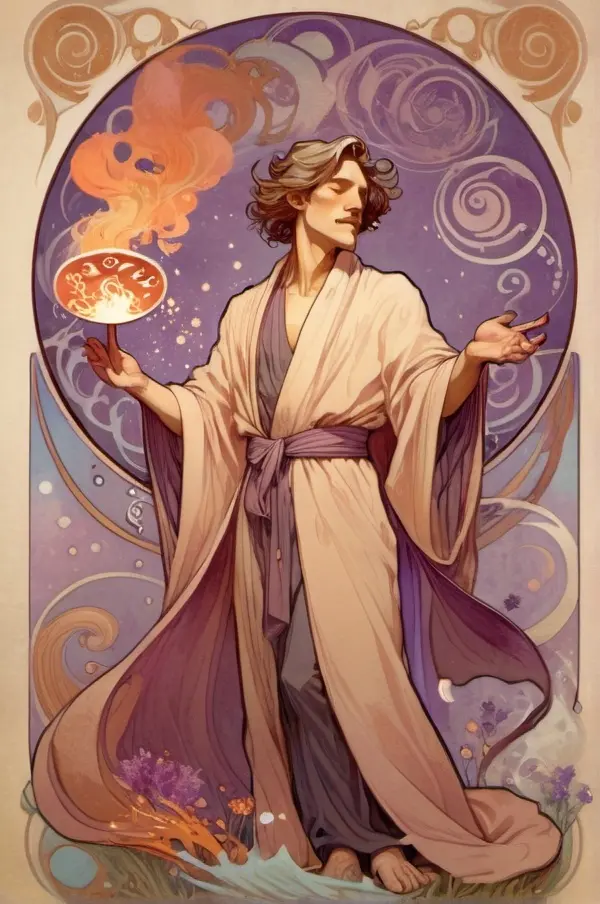
Wands: fire, drive, and the spark that starts things
Wands cover fire in its most literal sense: motivation, ambition, sexuality, creative work, and anything you would call a calling rather than a chore. When wands cluster in a spread, the question usually lives in the body as restlessness or hunger, not as a calm plan.
The temperature here runs hot. Wands cards move fast and want action. A wands-heavy reading rarely says "wait." It says "you already know what you want to do, so go do it," or, less comfortably, "you're burning fuel you don't have."
Three of Wands looks out from a cliff at ships already sailing. It marks early expansion, the point where a plan has left the drawing board but has not paid off yet. Ten of Wands shows someone bent under a stack of sticks they insisted on carrying alone. It is drive without delegation, the version of ambition that turns into exhaustion because nobody said no to one more thing.
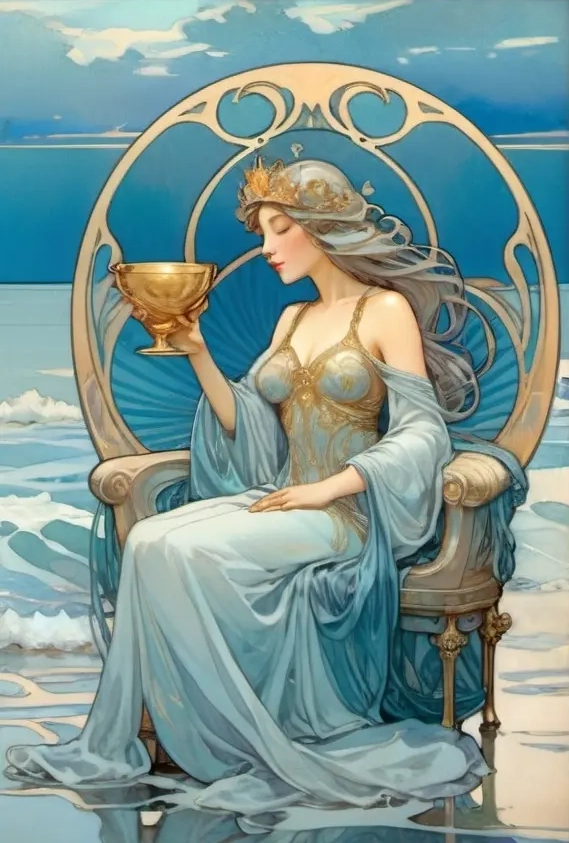
Cups: water, feeling, and what connects you
Cups are the suit of feeling. Love, friendship, grief, intuition, and the private emotional weather that runs underneath a decision. Where wands ask what you want to do, cups ask what you feel about it, which is a different and often slower question.
The temperature is fluid rather than hot or cold. Cups cards rarely rush. They pool, they overflow, they sit still until you notice them.
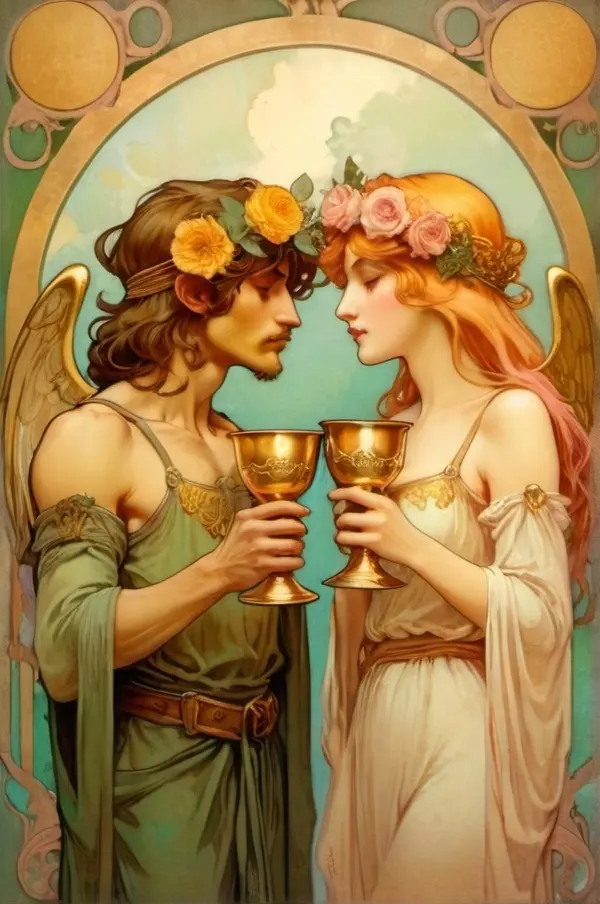
Two of Cups is mutual exchange, the moment a connection becomes two-sided instead of hopeful on one side only. Nine of Cups is satisfaction, the "wish card" people love to see when a cups question is about happiness rather than outcome. Five of Cups sits at the other end, a figure staring at three spilled cups while two full ones stand untouched behind them. It is grief that has not yet noticed what is still there.
Swords: air, thought, and the truth you can't unsee
Swords run on air: thoughts, words, arguments, decisions, and the kind of clarity that arrives whether you asked for it or not. This is the suit most often mistaken for pure bad news, mainly because it names conflict directly instead of dressing it up.
The temperature is sharp and cool. Swords cards think fast and feel slower. They are useful precisely because they cut through a story you have been telling yourself for weeks.
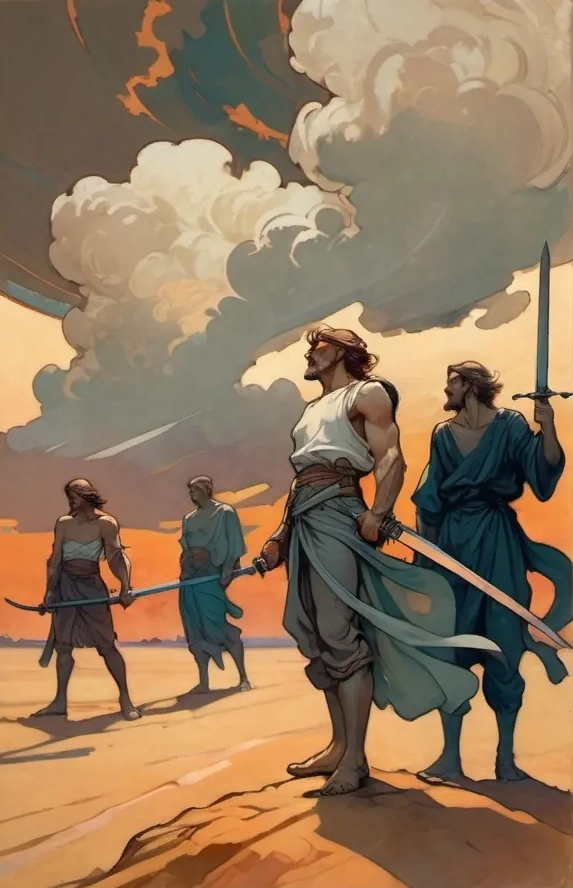
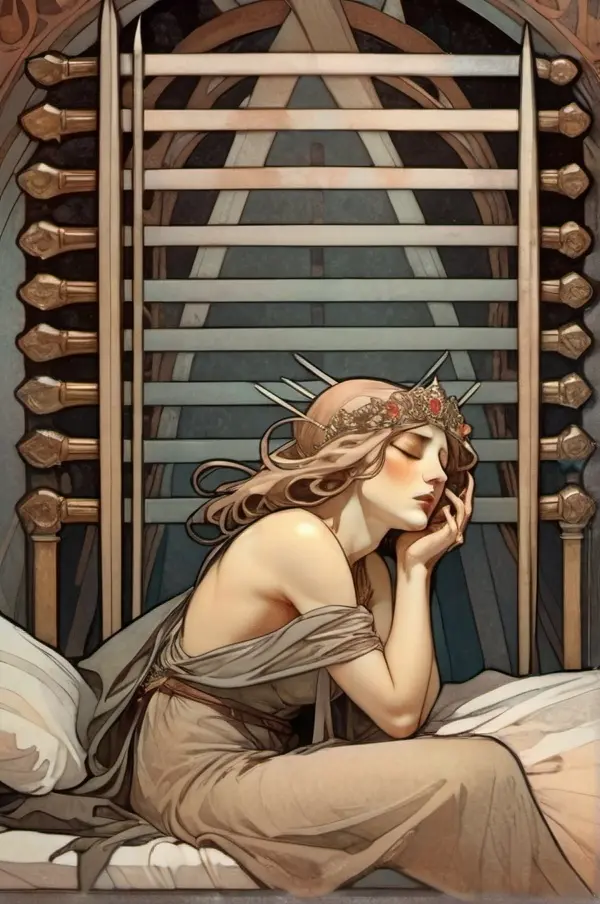
Two of Swords shows a blindfolded figure holding two crossed blades, stuck in a decision she is refusing to look at directly. Ace of Swords is the opposite motion, a single blade cutting straight through fog. It is the "you already know" card, the one that shows up when clarity has arrived and the remaining problem is whether you will act on it.
Pentacles: earth, the body, and what you can hold
Pentacles cover earth: the body, money, work you can measure, craft, land, and time. This is the suit of the material world, which does not make it the "boring" suit. Rent, health, a skill you are building slowly, a home you are trying to keep standing, all of that lives here.
The temperature is slow and grounded. Pentacles cards rarely spike. They accumulate, the way savings or a skill accumulate, one unglamorous session at a time.

Ace of Pentacles is a seed, an offer, a first paycheck from something new. Eight of Pentacles is the unglamorous middle, a figure carving coins one at a time, mastering a craft through repetition rather than talent. Five of Pentacles shows two figures out in the cold passing a lit window, a card about material hardship and the harder part, the reluctance to ask for help that is right there.
Which suit is running your spread
Once you know the four lenses, a fast diagnostic opens up. Lay out any spread and simply count. Whichever suit shows up most is usually where the real weight of the question sits, no matter what the individual cards say on their own.
A spread heavy in swords is a head problem: overthinking, an unresolved argument, a decision you keep circling without landing. A spread heavy in cups is a heart problem: feelings that need naming, a relationship asking for honesty, grief that has not been sat with yet. A spread heavy in wands is a drive problem, either a spark that wants permission to move or a pace that has quietly become unsustainable. A spread heavy in pentacles is a body-and-resources problem: money, health, logistics, or a plan that needs a schedule instead of another burst of inspiration.
When a spread splits evenly across suits, that itself is information. The situation is not sitting in one part of your life. It is touching your head, your heart, your calendar, and your bank account all at once, and the read should say so instead of forcing a single theme. For a closer look at how neighboring cards, not just suits, shift meaning, see tarot card combinations.
Court cards and majors: a light touch
Court cards, page through king in each suit, inherit that suit's element and domain but describe a person, role, or way of being rather than an event. A Queen of Cups reading is about emotional maturity and holding feeling steadily. A King of Pentacles reading is about grounded, practical mastery. The court still runs on the suit underneath it, just aimed at a person instead of a moment.
Major arcana cards interact with suits the way a headline interacts with an article. A major sitting beside a heavy swords hand suggests the mental pattern is not a passing Tuesday, it is a lesson repeating until it is learned. That relationship deserves its own deep dive elsewhere. Here the point is simpler: the suit tells you the terrain, the major tells you the stakes, and the court tells you who is standing in the scene.
Where TarotGo fits in
TarotGo shows every card's full image and notes on its own page, so you can check whether a reading is cups-heavy or swords-heavy at a glance instead of guessing from memory. Pull a spread, look at which suit keeps showing up, and read that pattern before you read any single card in isolation. If you want a low-stakes place to practice this, a free tarot reading with one clear question is enough to start noticing which suit your life keeps handing you.