You searched how to read tarot cards because the deck looks beautiful and slightly intimidating at the same time. That mix is normal. Tarot for beginners is not about memorizing seventy-eight fixed sentences. It is about learning to look at pictures, ask honest questions, and let a small spread tell a story you can actually use.
This guide covers tarot basics in the order most people need them: what is in the deck, how to shuffle without performance anxiety, how to frame a question that a spread can answer, which first layouts to try, and why the image on the card matters more than the keyword you saw on Pinterest.
You do not need psychic gifts. You need a deck, ten quiet minutes, and a willingness to write one sentence before you open a cheat sheet.
What is in a tarot deck
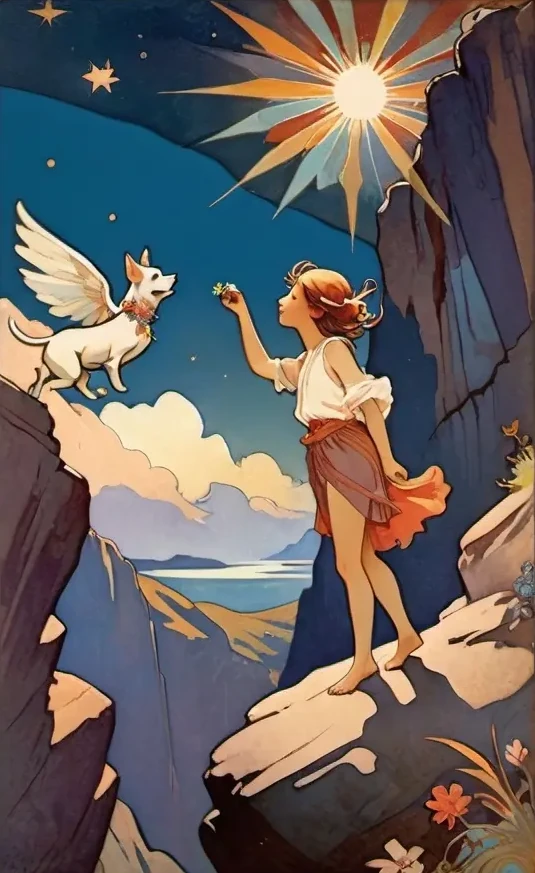
A standard tarot deck has seventy-eight cards. Twenty-two are the major arcana, the big archetypes from The Fool through The World. Fifty-six are the minor arcana, sorted into four suits with fourteen cards each.
The majors name chapters: initiation, conflict, surrender, rebirth, integration. They show up when a situation touches identity or a lesson that keeps returning. The minors name Tuesday: emails, flirtation, money stress, creative bursts, family friction.
Four suits, four flavors:
| Suit | Element | Everyday realm |
|---|---|---|
| Wands | Fire | drive, passion, creative push |
| Cups | Water | feeling, relationship, intuition |
| Swords | Air | thought, conflict, clarity |
| Pentacles | Earth | body, money, craft, time |
Each suit runs Ace through Ten, plus Page, Knight, Queen, and King. Court cards often describe people, roles, or ways of showing up. Number cards often describe stages of a process.
You do not need the fanciest deck on day one. Rider-Waite-Smith style decks are common for learn tarot paths because the pictures tell stories on their own. TarotGo uses that visual language too. When you pull a card in the app, the image and notes are built for study, not for doom scrolling.
For a deeper map of the big cards, keep major arcana meanings open beside this guide. For the full deck vocabulary, tarot card meanings is the reference most beginners return to after their first week of pulls.
Before you shuffle: set the table
Reading starts before the cards leave the box. You are not summoning spirits. You are creating conditions where you can notice what you usually rush past.
Pick one question. Not five. Not "tell me everything about my life." One thread you can hold in one breath.
Choose a spread size. Beginners do best with one card or three. A one card tarot reading trains focus. A three card tarot spread trains story without drowning you in positions.
Get paper. Write the question at the top. Leave room for three sentences under each card you pull. This sounds schoolish. It is the fastest way to stop rewriting the reading in your head until it matches your hope.
Decide your reversal rule. Some readers read upside-down cards as blocked or inward energy. Some ignore reversals for the first month. Pick one rule and keep it for ten sessions. Changing rules every pull is how tarot basics turn into noise.
Light a candle if that helps you slow down. Skip the candle if it feels like cosplay. The point is attention, not aesthetics.
How to shuffle tarot cards
There is no secret shuffle that makes the cards "more accurate." There is a shuffle that helps you arrive.
Hold the deck in your hands. Take two slow breaths. Repeat the question silently or out loud once. Then shuffle in whatever way your hands already know: overhand, riffle, messy pile on the table.
Overhand shuffle: pull small packets from the bottom to the top. Gentle, repeatable, good for beginners.
Riffle shuffle: bend halves together. Fine for study decks you are not collecting as antiques.
Pile shuffle: cut the deck into random stacks, then restack. Some readers love this for feeling "random enough" without fighting slick cards.
Shuffle until it feels done, not until your wrists hurt. For most people that is thirty seconds to two minutes. If you are still shuffling after five minutes, you are probably stalling because the question scares you. That is useful data. Write it down instead of shuffling forever.
When you are ready to pull, cut the deck with your non-dominant hand if you like ritual, or simply draw from the top. Pull once per position. Place the card face up. Do not flip through hunting for a prettier answer.
If a card jumps out mid-shuffle, you can treat it as significant or put it back and pull inside the spread. Pick one policy and keep it. Consistency beats superstition theater.
How to frame a question that tarot can answer
Bad questions produce blurry spreads. Not because tarot failed. Because the question had no edges.
Weak: "Will everything be okay?" Stronger: "What do I need to understand about this job offer before I reply?"
Weak: "What is my future?" Stronger: "What energy is most active in my creative work this month?"
Weak: "Does he love me?" (emotionally honest, structurally vague) Stronger: "What is true about connection between us right now, and what is story I am telling myself?"
Good beginner questions tend to share traits:
- they name a situation, not the whole universe
- they ask for insight, stance, or next step, not a sealed fate
- they leave room for your agency
Yes-or-no questions are popular and tricky. If you need a fast lane, read yes or no tarot for how to ask without forcing the cards into a coin flip. If the question is really "what do I need today," a daily tarot reading with one card is often cleaner than a dramatic spread.
Write the question in plain language. Read it aloud. If you blush or laugh nervously, you are probably close to something real.
Read the picture before the keyword
This is the skill that separates tarot for beginners from keyword bingo.
When a card lands, pause. Do not reach for the book yet. Look at:
- Posture: who is moving, who is still, who faces away?
- Weather and light: bright sun, gray sky, night, indoor lamp?
- Objects: what is held, dropped, guarded, offered?
- Numbers and suit: threes often mean growth or collaboration. Swords often mean mental weather.
- Your first body hit: tight chest, relief, curiosity, dread?
Say out loud what you see like you are describing a film still to someone on the phone. "A person sits with crossed arms between two cups. A third figure offers another cup from the left. The sky is pale. Nobody is drinking yet."
Only after that sentence, open meanings. Compare your picture notes to the keyword list. The gap between them is where your reading lives.
The guide on looking before you interpret goes deeper on this habit. Treat it as required homework, not optional poetry. Every experienced reader you admire still does some version of slow looking.

Your first spreads: start small, stay consistent
You do not need ten layouts on day one. You need two or three you can repeat until the steps feel like making tea.
One card: the honest snapshot
Shuffle with one question. Pull one card. Write one sentence from the image. Then add a second sentence that answers "so what might I do with this today?"
Use this for morning check-ins, pre-conversation nerves, or when you are spiraling and need a single focal point. Full walkthrough: one card tarot reading.
The Star in a one-card pull might mean repair after a hard week, not "everything is fixed forever." Four of Swords might mean rest is the actionable insight, not laziness.
Daily card: build a rhythm
Pull one card at a similar time each day for two weeks. Note the card, one image detail, one line about how the day actually went. You are training pattern recognition, not predicting lottery numbers.
See daily tarot reading for question frames that keep dailies from turning into anxiety loops.
Three cards: learn story structure
The classic past, present, future row is the layout most teachers assign first. Card one names roots. Card two names what is live now. Card three names pressure or direction ahead if the row stays on this track.
Lay three cards left to right. Label the positions on paper before you pull. Read in order. Link all three in one sentence: "Because X led here, and Y is true now, Z is the pressure ahead."
Other beginner-friendly three-card frames:
- Situation, action, outcome for practical problems
- Mind, body, spirit for overload weeks
- You, other, between for relationship confusion
Full guide: three card tarot spread.
Upright, reversed, and when to keep it simple
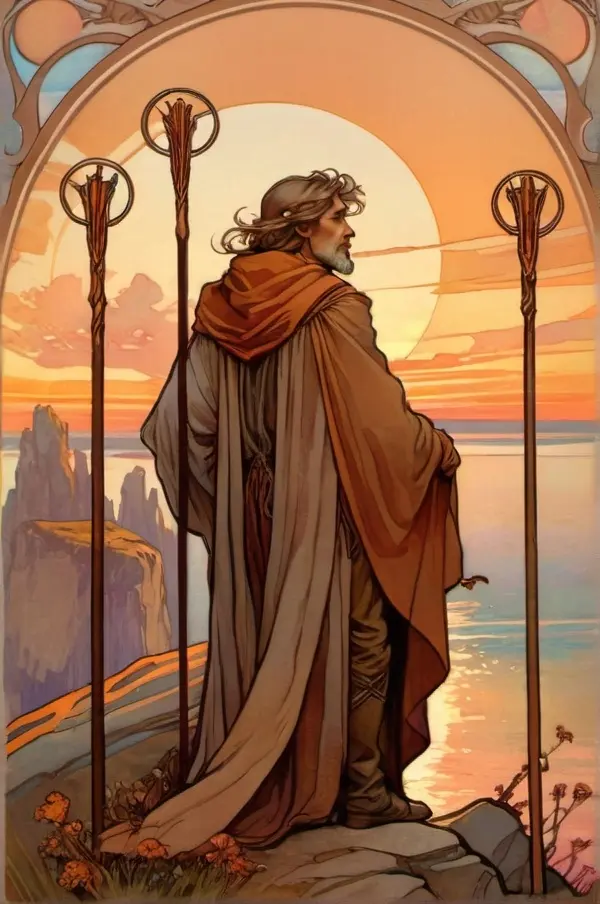
Upright cards often read as the energy moving in a visible, outward way. Reversed cards often read as blockage, delay, private processing, or the same theme turned inward. Some cards flip cleanly. Some feel fussy on day three.
Beginner-friendly approach:
- month one: read upright only, or treat reversals as " quieter version of the same scene"
- month two: add one reversal note per reading max
- keep a tiny journal of cards that surprised you reversed
Do not build a separate seventy-eight-word reversed dictionary before you can describe the upright picture. Pictures first. Nuance later.
Common beginner mistakes (and easy fixes)
Pulling until you like the story. That trains anxiety. Pull once per position. Write before you re-pull. A free tarot reading helps when it is repeatable and logged, not infinite until the narrative flatters you.
Skipping position labels. Three cards without jobs become three random Instagram photos. Label first.
Memorizing without looking. Keywords without images produce generic readings that could apply to anyone.
Treating majors as always louder. A minor in the right seat can carry the whole message. Eight of Pentacles in "what skill matters now" needs no major cameo.
Reading for other people too early. Practice on your own questions until you can finish a three-card row without checking your phone mid-sentence.
Expecting tarot to choose for you. Cards clarify. You still decide. That is a feature.
A simple four-week learn tarot plan
Week 1: one card per day. Image description only. No meanings book.
Week 2: one card per day plus one keyword from tarot card meanings. Notice matches and misses.
Week 3: three-card spread twice. Past, present, future both times. Same labels, different questions.
Week 4: one real-life question you have been avoiding. Three cards. One written paragraph. No re-pulls.
By week four you will not know every card. You will know how to start. That is the real tarot basics milestone.
Notes that speed up learning
Keep a short reading log. Date, question, cards, one line on what you saw in the image, one line on what you did the next day. After two weeks you will notice repeats: the same suits in the same themes, the same fears hiding inside how you phrase the question.
A physical deck and the app can work together. Pull in TarotGo in the morning, revisit the same card with paper at night, and compare what you notice differently. The gap between screen and cardboard is part of tarot basics too.
When you want to test understanding without a new spread, open major arcana meanings and read about one card you have already pulled three times. Compare the book text with what you wrote in your log. Matches feel good. Mismatches teach more.
Where TarotGo fits
TarotGo is for readers who want to learn tarot without treating every pull like emergency weather. Shuffle in the app or with your physical deck, open the card page for symbolism you can study calmly, and return when you are steady enough to see the image instead of only the headline in your head.
How to read tarot cards is a skill built in public: one question, one spread, one honest look at the picture. Start with the deck map and shuffle ritual above. Add spreads only when one card feels too small for the question. Keep notes. Let the cards argue with you a little. That friction is how tarot for beginners becomes a language that sounds like your actual life.