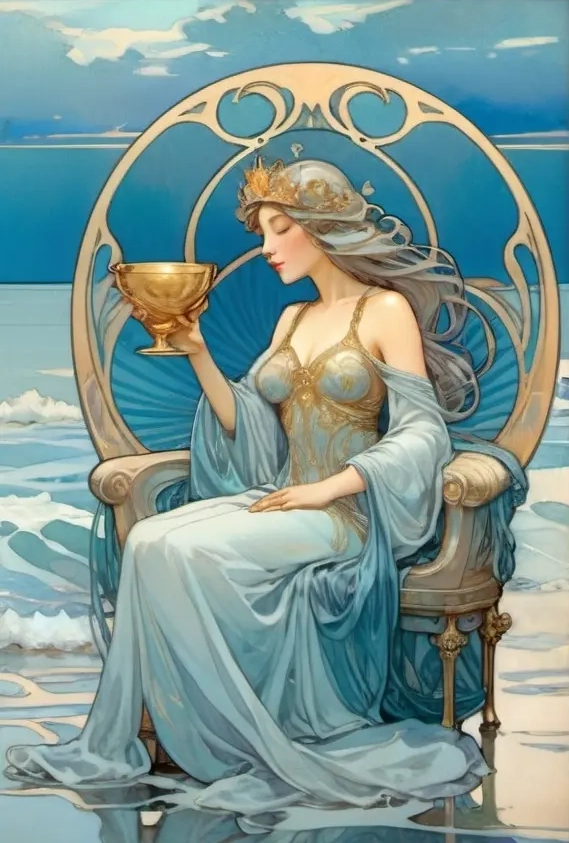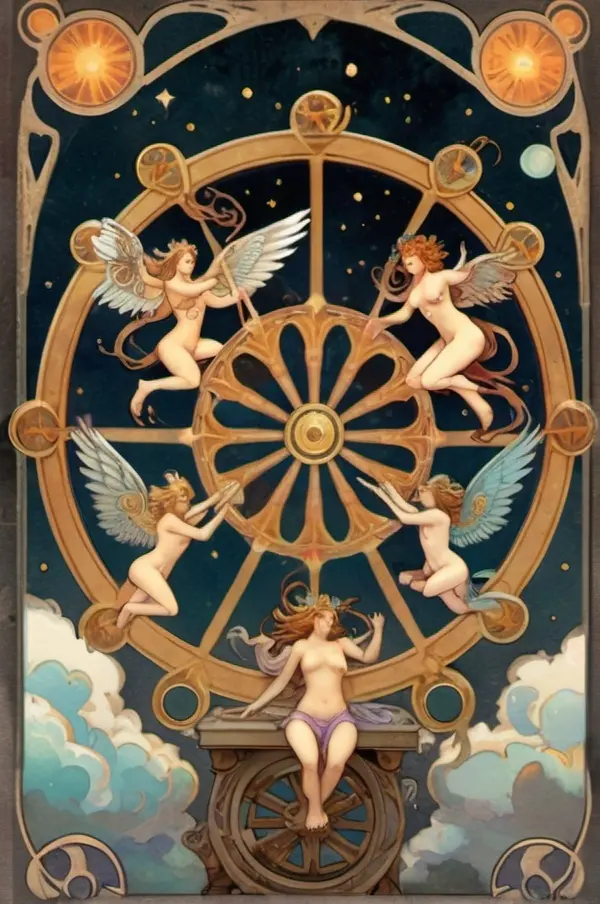
You searched for minor arcana meanings because the majors get all the attention and the other fifty-six cards can feel like a foreign alphabet. Fair complaint. The minor arcana are not filler between The Fool and The World. They are four small stories, one per suit, each running from a spark (Ace) to a full stop (Ten), plus four people-shaped cards who carry that story into a room. Learn the shape once and you can read almost any minor card cold, even one you have never memorized.
This minor arcana guide will not walk all 56 cards one by one. That would repeat the major arcana meanings article at three times the length and still read like a glossary nobody finishes. Instead you get the architecture: what Ace through Ten mean as a narrative arc in any suit, what the four court cards represent as roles, and a concrete look at each suit with real example cards so the theory has somewhere to land.

What the minor arcana actually are
A standard deck has seventy-eight cards. Twenty-two are majors. The other fifty-six are the minor arcana tarot cards, split into four suits of fourteen: Ace through Ten, then Page, Knight, Queen, and King. Where majors speak in archetypes (the seeker, the tower, the star), minors speak in Tuesday. Emails, arguments, a raise, a slow morning, a decision about rent. If a major card is a chapter title, a minor card is a paragraph inside that chapter.
That does not make minors small. A Nine of Swords at 3am is not a minor concern to the person holding it. It just means the reading is about a specific situation instead of a lifelong pattern. Most real-life spreads lean minor-heavy, because most weeks are made of specific situations, not identity-level turning points.
The shared architecture: what Ace through Ten mean
Here is the part that actually saves you memorization. Every suit runs the same emotional arc, just colored by its own element. Learn the arc once and a minor arcana list stops being 40 separate cards and becomes 10 stages repeated four times.
| Rank | What it usually marks in the story |
|---|---|
| Ace | Pure potential, the spark before it has a plan |
| Two | A first choice, a balance, someone else enters the frame |
| Three | Growth, collaboration, the idea leaves your head |
| Four | A pause, stability, sometimes stagnation dressed as rest |
| Five | Friction, conflict, loss, the plan meets resistance |
| Six | Recovery, generosity, a return to balance after the five |
| Seven | Assessment, patience, effort that has not paid off yet |
| Eight | Skill in motion, focus, movement toward mastery |
| Nine | Near completion, intensity, the strain right before the finish |
| Ten | Completion, sometimes overload, the cycle closes |
Read that arc across a single suit and you can feel the shape without opening a book. Ace of Cups is a feeling arriving with no story yet. Ten of Cups is that same feeling grown into a whole family scene. Ace of Swords is one clear thought. Ten of Swords is what happens when that thought was left unresolved for nine cards too long. The number tells you where you are in the story. The suit tells you which room the story is happening in.
The arc also works sideways. Take any Two. The Two of Wands is a first choice about where to point your ambition. The Two of Cups is a first choice about who to open up to. The Two of Swords is a choice being postponed because both options feel risky. The Two of Pentacles is juggling a choice between two obligations at once. Same number, four different reasons to choose. When an unfamiliar card shows up, ask "what rank is this" before "what suit is this." That alone usually gets you most of the way to the right read before you recall the exact image.
The court cards: four roles, not four strangers
The sixteen court cards intimidate people because they look like a cast list. They resolve fast once you treat them as roles or modes rather than sixteen separate personalities.
Page, roughly: a student, a message, curiosity before competence. A Page shows up when something is new and still forming, in you or in someone nearby.
Knight: pure motion. Knights ride toward or away from something with little room for nuance. They mark action, pursuit, sometimes recklessness, always momentum in one direction.
Queen: mastery turned inward. A Queen has fully absorbed her suit's energy and now holds it quietly, ready to use. Queens read as emotional intelligence, competence, someone (you or another person) who does not need to prove the skill anymore.
King: mastery turned outward. Kings apply their suit in the world through authority, decisions, or visible responsibility. Less about feeling the suit, more about running it.
Any court card can represent you, another person, or simply a mode you are in right now. A Queen of Pentacles pulled for "what do I need this month" is not predicting a person walking into your life. It is describing steady, practical self-management.
The four suits, one at a time
Wands: fire, drive, and creative risk
Wands cover ambition, passion projects, work you actually want to do, sex drive, and motivation in general. When wands stack up in a spread, the question is usually about momentum, not feelings.
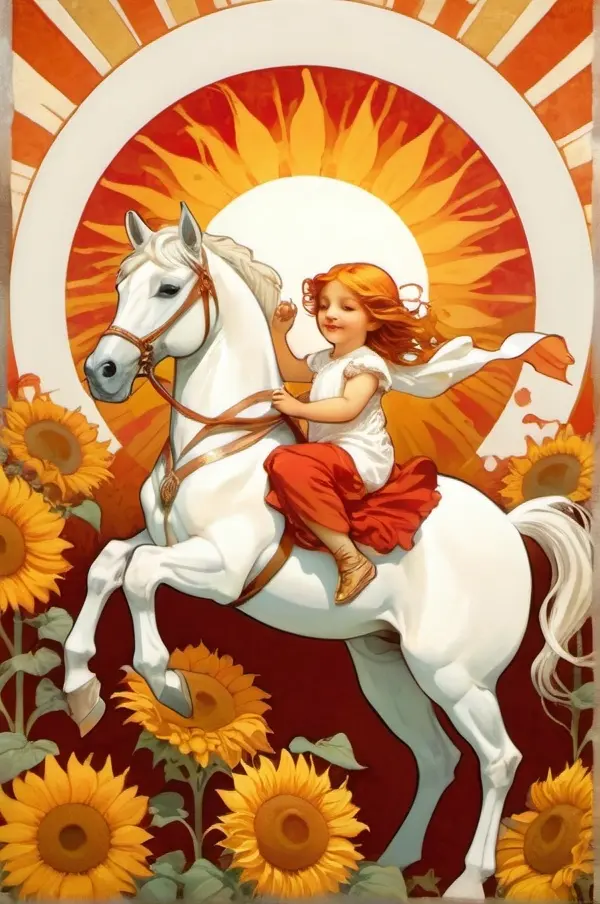
The Ace of Wands is the spark shown at the top of this article, a single offer of energy with no plan attached yet. The Three of Wands looks outward from a height, waiting to see if ships you already sent out will return. The Ten of Wands carries too much at once, the moment ambition turns into a burden you built yourself.

Cups: water, feelings, and connection
Cups cover love, friendship, intuition, grief, and the whole emotional weather system. This is the suit people mean when they ask a spread "does he love me" without saying so directly.
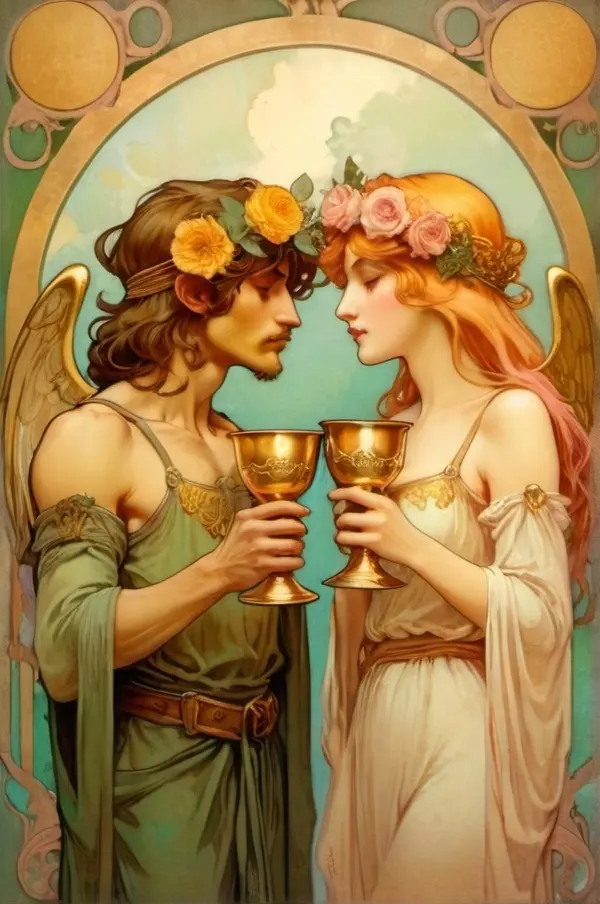
The Two of Cups is a first mutual pull, two people meeting each other's eyes across an exchange. The Nine of Cups is quiet satisfaction, a wish landed and enjoyed rather than chased. The Ten of Cups closes the suit with a full, shared kind of happiness, less private than the Nine, built for more than one person.
Swords: air, thought, and plain talk
Swords cover the mind: decisions, conflict, hard conversations, and the kind of clarity that cuts both ways. This suit gets a reputation for being harsh, mostly because it refuses to soften an honest thought into a nicer one.
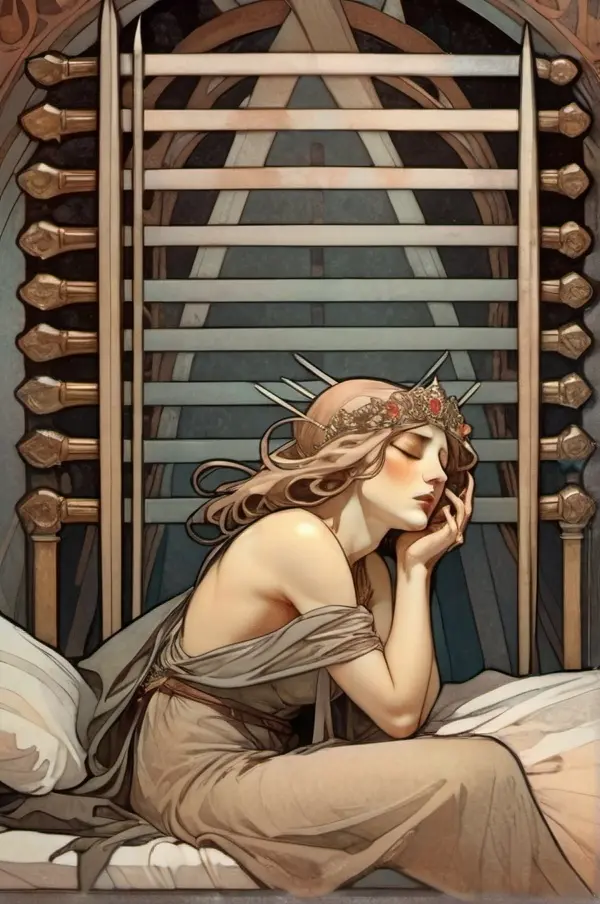
The Ace of Swords is one clean idea, sharp enough to cut through confusion in a single line. The Four of Swords is the necessary pause, a mind that needs rest before it can think straight again. The Nine of Swords is the suit at its most raw, the 3am spiral where worry has replaced sleep.
Pentacles: earth, money, and the body
Pentacles cover money, work, health, home, and anything you can measure or hold. If a spread keeps handing you pentacles, the question is probably more practical than it first sounded, whatever the original wording was.
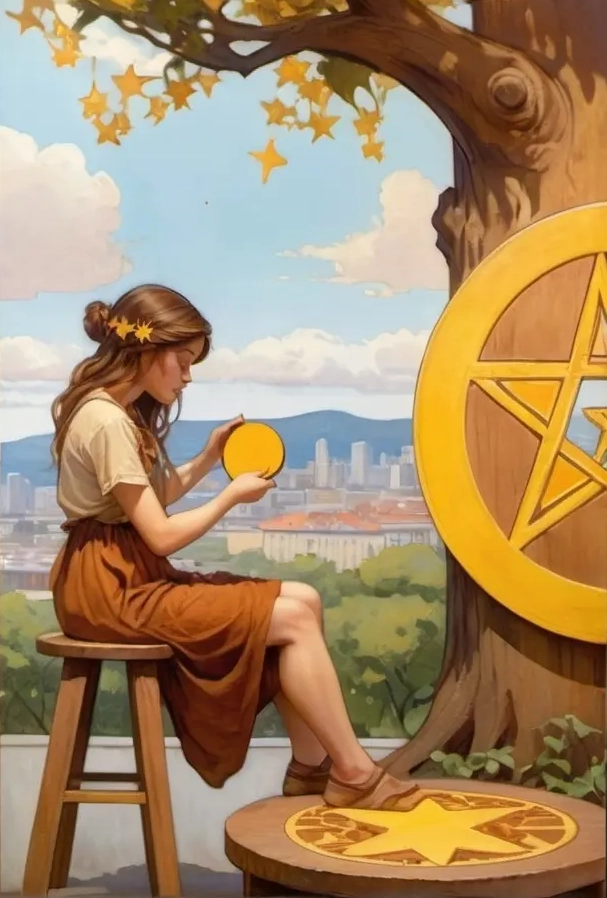
The Ace of Pentacles is an opportunity you can actually touch, a job offer, a first paycheck, a seed with real soil under it. The Eight of Pentacles is unglamorous, steady skill-building, the suit's version of showing up to practice. The Ten of Pentacles closes the story with long-term security, the kind that outlives one paycheck and starts to look like a legacy.
How minors and majors read together in a spread
A spread rarely gives you only majors or only minors, and that mix is information on its own. If a pull is mostly minors with one major sitting in the middle, the major usually names the theme and the minors describe how that theme is actually showing up this week. If a pull leans heavily major, you are probably looking at something closer to an identity shift than an errand, the territory the major arcana article above covers in full.
Position and neighbors still do most of the interpretive work. A Ten of Cups next to The Sun is straightforward joy. The same Ten of Cups next to The Tower can describe a happy ending that is about to get disrupted, or a family scene the querent is clinging to a little too hard. Read the row, not the isolated card.
For the mechanics of laying out a spread and reading rows instead of single cards, how to read tarot cards walks the full process. And once suits and ranks feel familiar, tarot card meanings has the complete 78-card reference for the moments you want a quick check instead of the full arc.
Practice without memorizing 56 cards
Minor arcana meanings settle in when you use them on a real question, not when you highlight a glossary. Try this short study spread on whatever is actually going on this week.
- Suit: which area of life is active, work, feeling, thought, or the body?
- Rank: where does the question sit on the arc from spark to completion?
- Court card, if one shows up: what role is being asked for, learning, action, quiet mastery, or visible responsibility?
Pull one card, name its suit and rank out loud before you check any keyword list. After a couple of weeks that habit does more for recall than memorizing all 56 cards individually ever will.
Where TarotGo fits in
TarotGo keeps every minor card on its own page, with the art, the rank, and the suit laid out so you can check the pattern instead of guessing. Pull a card, notice which rank it sits at in its suit's arc, and let that alone tell you most of the story before you read a single keyword. The minor arcana meanings above are a map, not a script. The deck fills in the rest once you start pulling for real questions instead of study sessions.