Tarot court cards are the sixteen face cards spread across four suits, and each one answers two questions at once: what rank is this (Page, Knight, Queen, King) and what suit colors it (Cups, Wands, Swords, Pentacles). Pulled on its own, a court card can feel like a stranger who wandered into your spread with no introduction. Pulled as part of a system, the tarot court cards stop being sixteen flashcards to memorize and start behaving like a small, logical family: four kinds of energy, each one expressed four different ways.
This guide lays out that grid, walks through what each rank means before you even look at the suit, shows how the suit bends the rank, and gives you a practical way to decide whether a court card in your reading points to a real person, a piece of yourself, or an approach worth borrowing. For the rest of the deck, see tarot card meanings.
The court is a grid, not sixteen strangers
A standard deck has 78 cards. Twenty-two are the major arcana. The other 56 split into four suits of fourteen: Ace through Ten, then four court card ranks that close out each suit. That is the whole system: four ranks times four suits equals sixteen cards.
| Rank | Cups | Wands | Swords | Pentacles |
|---|---|---|---|---|
| Page | Page of Cups | Page of Wands | Page of Swords | Page of Pentacles |
| Knight | Knight of Cups | Knight of Wands | Knight of Swords | Knight of Pentacles |
| Queen | Queen of Cups | Queen of Wands | Queen of Swords | Queen of Pentacles |
| King | King of Cups | King of Wands | King of Swords | King of Pentacles |
Once you see it as a grid instead of a cast of sixteen individuals, the whole tarot court guide gets simpler. You are not learning sixteen meanings from scratch. You are learning four ranks, then learning how each of the four suits colors those ranks. That is eight ideas, not sixteen, and the eight combine.
What each rank means, before you even look at the suit
The rank is the constant. Whatever suit it lands in, a Page acts like a Page and a King acts like a King. Learn this layer first and the rest of the page knight queen king tarot system gets much faster to read.
Page: a message, a student, a beginning
A Page is the youngest and least fixed of the court. It carries news, an early idea, or a person (often but not always literally young) who is new to whatever the suit governs. Pages study. They ask more than they answer. In a spread, a Page usually means something has not fully formed yet: a message on its way, a skill still being learned, a beginner's curiosity that has not been tested by follow-through. Treat a Page as a signal to pay attention, not a finished statement.
Knight: movement, a mission, all in
Knights are the suit in motion. Where a Page is still deciding what to do, a Knight has already committed and is riding hard in one direction. That makes Knights the most active cards in the deck, full of momentum, pursuit, and single-minded focus. It also makes them the most likely to overshoot. A Knight rarely does anything halfway, which is a strength when the mission is right and a problem when it is reckless. In a reading, a Knight often marks a decision already in motion rather than one still being weighed.
Queen: mastery held from the inside
A Queen has fully absorbed her suit. She is not performing competence, she has it, and she holds it quietly. Queens read as maturity turned inward: someone who knows what she feels, wants, or values, and does not need an audience to confirm it. That makes Queens nurturing in a grounded way rather than a self-sacrificing one. A Queen sets a boundary as easily as she offers comfort, because both come from the same settled place. When a Queen shows up, the spread is often pointing at steady, internal command of whatever the suit represents.
King: mastery pointed outward
A King carries the same mastery as a Queen but aims it at the world instead of holding it inward. Kings decide, lead, and take visible responsibility for outcomes. Where a Queen's competence shows up as presence, a King's shows up as action and structure other people can see and rely on. That is the gift and the risk in one card: authority that steadies a room, or control that crowds it. When a King appears, ask what needs a decision, a boundary, or someone willing to be accountable out loud.
How the suit flavors the rank
The rank tells you what kind of energy is present. The suit tells you where that energy is spent, and that changes the card's whole personality. A Queen of Cups and a Queen of Swords are both mature, internal command of their suit, and they could not feel more different in a reading.
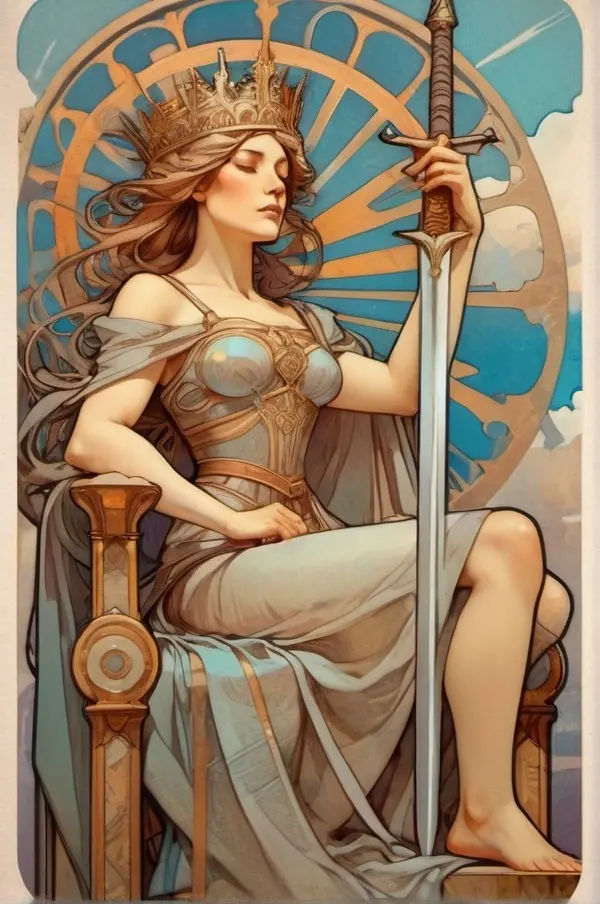
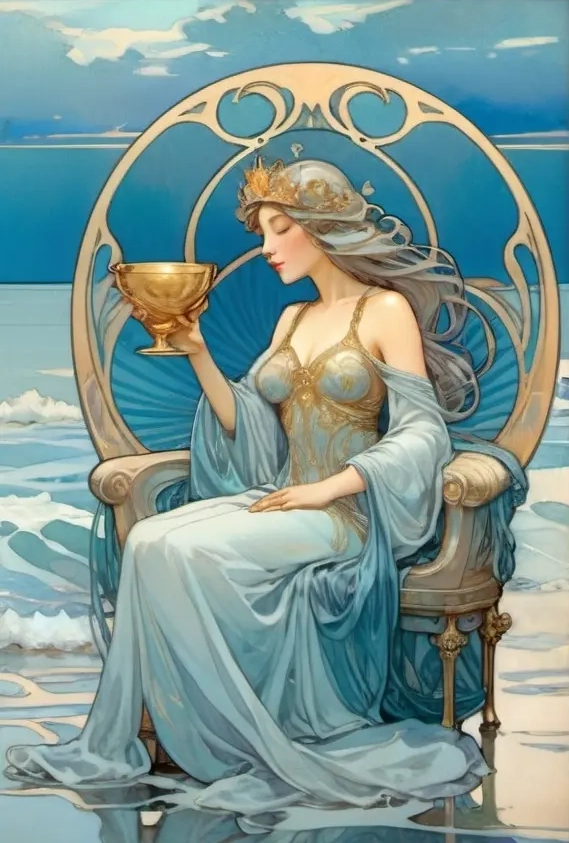
The Queen of Cups holds emotional maturity. She reads a room before it speaks, offers comfort without losing herself in someone else's mood, and trusts intuition the way other people trust a spreadsheet. The Queen of Swords, by contrast, holds mental maturity. She has usually earned her clarity through something hard, speaks plainly even when it costs her, and keeps a boundary that does not bend for comfort. Same rank, same internal mastery, completely different climate.
That pattern repeats across the whole grid. Cups court cards run on feeling and connection. Wands court cards run on drive, creativity, and risk. Swords court cards run on thought, communication, and sometimes conflict. Pentacles court cards run on the body, money, and anything you can actually hold in your hand. Once you know a rank's baseline, ask "what suit is this rank standing in" and the specific read usually falls into place.
Person, aspect of yourself, or energy to adopt?
Court cards are the part of a spread most likely to trip up a new reader, because a single card can mean three genuinely different things. Here is a practical way to sort it out.
Start with the question. If you asked about a specific relationship, a hiring decision, or "who is this," lean toward a real person. Court cards answer literal questions literally more often than major arcana do.
Check whether the card actually resembles someone you know. Match the suit's temperament and the rank's maturity level against real people in the situation, not just age or gender. A Knight of Wands is not necessarily young, it is whoever in the story is moving fast and taking the swing without checking twice.
Look at the position it landed in. A court card in a "you" or "your approach" position is usually describing an aspect of yourself, not a stranger walking in. The same Queen of Pentacles that could mean a stable colleague, in a "what do you need right now" position, is more likely a nudge toward your own grounded, practical self-management.
If neither fits, treat it as an energy to borrow. Sometimes a court card is not describing anyone, it is describing an approach the situation calls for. A King of Swords in "what would help" is not predicting a stern authority figure. It is suggesting you decide with a clear head and say the hard thing plainly. If you want more on reading a card's picture before jumping to keywords like this, how to read tarot cards walks through that habit in more depth.
None of these checks are exclusive. A single Queen can describe your best friend, a part of you, and the approach the week is asking for, all at once. The context around the card, not a fixed rule, decides which reading fits.
A few court cards up close
Seeing a handful up close makes the pattern concrete faster than any list of rules.
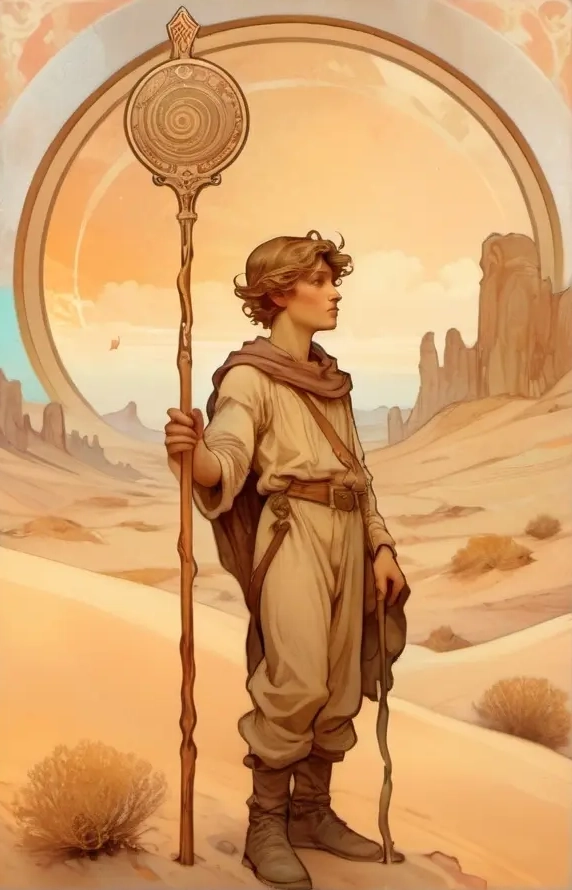
Page of Wands. A new creative spark, a text that got you unreasonably excited, an idea that has not survived contact with a to-do list yet. In a reading it often means enthusiasm is real but untested. Follow it, just do not build a business plan around it in week one.
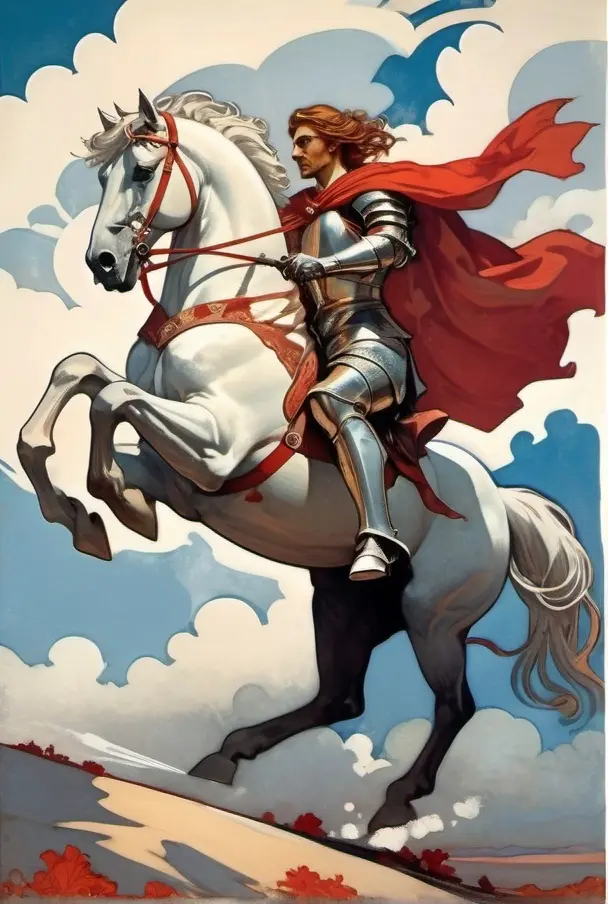
Knight of Swords. Fast, blunt, and already three steps ahead. This card shows up when someone (maybe you) is pushing a decision through with speed and sharp words, for better or worse. It rewards decisiveness and punishes patience, so check whether the moment actually calls for haste.
King of Pentacles. The provider who built something real and stands behind it, showing up in spreads about stability, long-term investment, or someone whose word on money and resources you can trust.
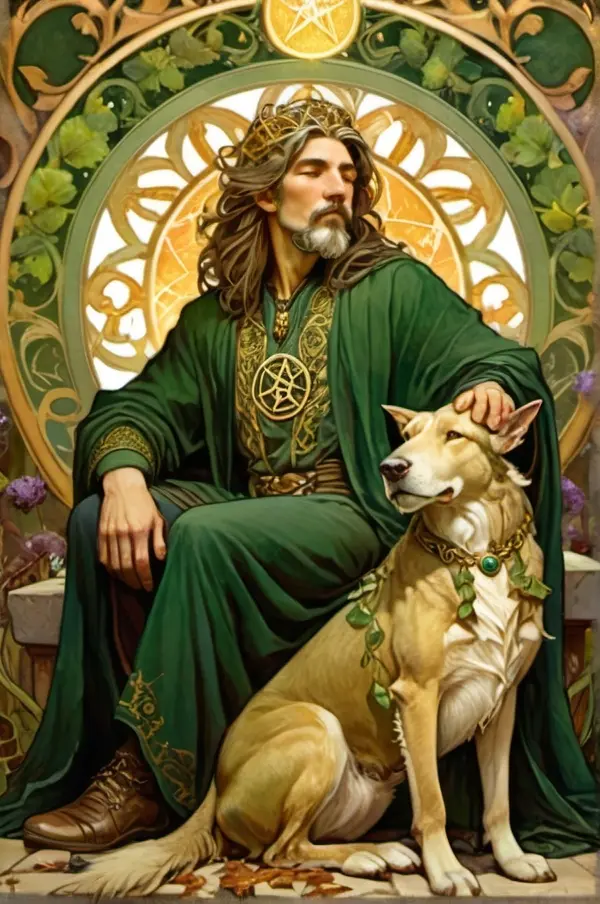
Paired with the two Queens above, that gives you a rank in every register: a Page still forming, a Knight already moving, two Queens holding mastery inward in different climates, and a King putting that mastery to visible use. Sixteen cards, one grid, a lot fewer surprises.
When you want more on Pages specifically
Pages get a longer, dedicated look in tarot pages and the messenger energy behind them, which goes deeper into why Pages read like early news across every suit and how to treat them as a signal rather than a verdict. If a Page keeps showing up in your pulls lately, that article is the next stop after this one.
Where TarotGo fits in
TarotGo lets you open any of the sixteen court cards on its own page, sit with the art, and compare a Queen or King across suits side by side instead of guessing from memory. Next time a court card lands in one of your readings, pause before you reach for a keyword. Name the rank, name the suit, then ask which of the three readings (person, aspect, energy) actually fits your question. That habit turns the court from the most confusing part of the deck into the most useful one.