You searched for tarot card combinations because a single keyword stopped being enough. One card gave you a word. Two cards gave you friction. Three cards gave you a sentence you could not ignore.
Reading tarot pairs is where most readings actually begin to sound like life. Tarot pair meanings are not a secret appendix in the back of a reference book. They are the grammar of the spread: who talks to whom, who amplifies whom, who contradicts the story you wanted before you shuffled.
This guide covers how pairs interact, what happens when suits mix, how major arcana cards change minors beside them, and why the whole row matters more than seventy-eight isolated definitions. If you still lean on keyword lists, start with tarot card meanings. If you rush past the image, read look before you interpret first. Then come back here with eyes that already know how to slow down.
What tarot card combinations actually are
A tarot card combination is any moment when two or more cards share a reading and change each other's tone. That includes neighbors in a row, cards that mirror each other across a spread, and a major card sitting on top of a daily minor theme.
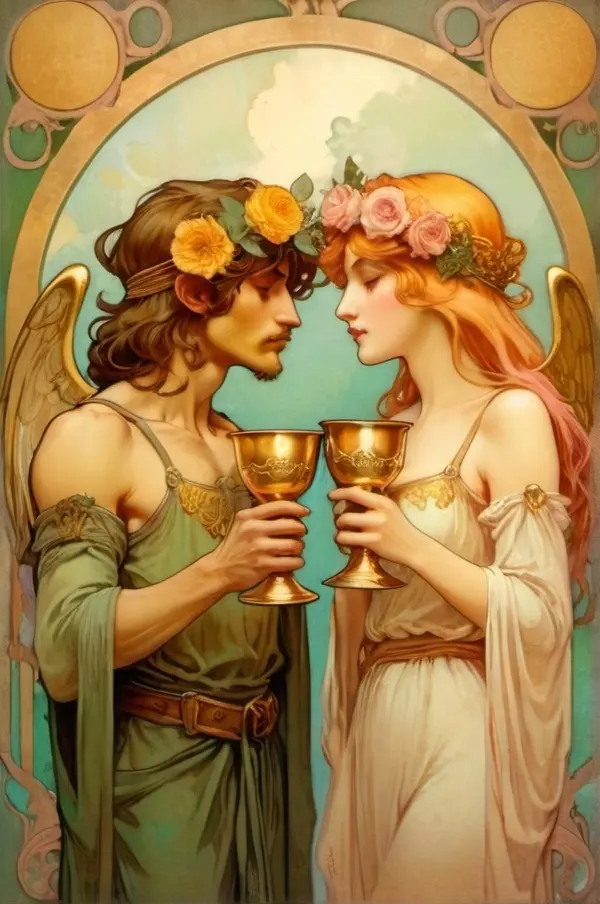
Combining tarot cards is not adding synonyms. The Tower plus Two of Cups is not "disaster plus love" as a bumper sticker. It might be a bond meeting a shake-up. It might be intimacy that survives a hard truth. It might be a relationship that cannot survive the next honest conversation. The pair decides which story fits your question.
Single-card literacy matters. Combination literacy is what turns literacy into reading. You already know that the Ace of Pentacles can name an offer. Beside the Seven of Swords, the offer may need vetting. Beside the Ten of Pentacles, the offer may anchor a long build. Same ace. Different sentence.
How tarot pairs interact
When reading tarot pairs, use three moves before you hunt for a memorized combo list.
1. Read the relationship, not only the labels
Ask how card A relates to card B in the picture and in the position.
- Do they face each other or turn away?
- Does one card's element feed or fight the other?
- Does the second card answer, block, or complicate the first?
Two of Swords beside Eight of Wands often reads as stalemate before speed, or speed that arrives before you have chosen a lane. The pair is about timing between thought and motion, not "air plus fire" as abstract math.
2. Name who leads
In English we read left to right in many spreads. In a three-card row, the middle card is often the hinge. A major beside a minor usually borrows scale from the major: the minor shows where the archetype lands in Tuesday.
Example: The Empress next to Four of Pentacles may show nurture meeting grip. Growth wants room. Fear wants control. The pair asks where care turned into holding too tight.
3. Write one sentence for the pair
If you cannot link two cards in one plain sentence, you may still be reading them separately. "Because X is true, Y follows" is enough. Keep the sentence on the ground. If it sounds like a movie trailer, simplify.
Suit combinations: mixing elements on purpose
The four suits carry different questions. Combining tarot cards across suits is how spreads show inner conflict, mixed weather, or a plan that needs more than one kind of energy.
| Mix | What it often sounds like | Question to ask |
|---|---|---|
| Wands + Cups | passion meets feeling | Do I want this, or do I only want the rush? |
| Wands + Swords | drive meets argument | Is the fight about the goal or about being right? |
| Wands + Pentacles | spark meets craft | Can this idea survive real work and real time? |
| Cups + Swords | heart meets head | Which story am I telling myself about what I feel? |
| Cups + Pentacles | bond meets body | Does this connection show up in daily life, not only in longing? |
| Swords + Pentacles | decision meets resource | What does this choice cost in money, health, or hours? |
None of these mixes is automatically good or bad. A cups-heavy row with one pentacles card may say feelings are real but the rent still matters. A swords-heavy row with one cup may say the problem is narrative, not lack of love.
Same suit, different number
Two cards from one suit can tell a development story fast. Five of Cups beside Six of Cups may move from grief toward memory, or from what spilled to what still warms. Three of Swords beside Ace of Swords may hurt before clarity arrives.
Same-suit pairs are useful when you want precision without pulling more cards. They are also where beginners overfit: not every cups pair is about romance. Check the question.
Opposing suit pressure
Fire and water, air and earth, do not "cancel." They negotiate. A spread with wands and cups may show desire pulling against emotional need. Swords plus pentacles may show a smart plan that ignores the body. Name the negotiation out loud. That naming is often the reading.
Major arcana plus minor arcana pairs
Majors carry archetypes. Minors carry weather. Tarot pair meanings get sharper when you know which side is setting scale.
Major lifts the minor
When a major sits beside a minor, ask what big chapter touches daily life.
- The Lovers with Three of Pentacles may show values alignment in shared work, not only romance.
- Death with Eight of Cups may show leaving what emotionally ended already.
- The Star with Nine of Swords may show hope after a hard mental night, not instant relief.
For a focused tour of the twenty-two big cards, see major arcana meanings. For how reversals bend a pair, see reversed tarot cards meaning.
Minor grounds the major
Sometimes the minor is the headline. Four of Wands beside The Moon might show celebration with fog underneath, or a public milestone while private doubt still runs. The major does not always win volume. Position and question decide.
Two majors in one spread
Two majors together can feel loud. Do not panic. Ask whether they describe one theme from two angles or a real tension.
Justice and The Devil may show accountability versus attachment. Temperance and The Tower may show slow blend meeting a break that will not wait. Read the pair as dialogue, not as double doom.
Spreads as conversation, not isolated cards
A spread is a room. Cards enter and respond to what was already said. Tarot card combinations across three, five, or ten seats work the same way pairs do, with more sentences.
In a three card tarot spread, card one sets context. Card two answers back. Card three names what follows if the conversation stays on this track. You are not collecting three definitions. You are hearing one thread.
Try this order:
- Glance the whole row before you deep-read card one.
- Read card one in its position only.
- Read card two as response to card one and to the question.
- Read card three as where the thread points.
- Say the row in one breath, then check if any card still fights the sentence.
Example for a job question, past-present-future:
- Past: Eight of Pentacles names craft built in repetition.
- Present: Two of Pentacles names balance in motion, tradeoffs live now.
- Future: Three of Wands names horizon expansion once balance finds a lane.
The combination story: years of skill meet juggling today, then visibility ahead if you stop splitting attention. Remove any one card and the sentence breaks. That break test is useful. It tells you the spread is working as conversation.
Echoes and repeats
When the same suit or number repeats, treat it as emphasis, not redundancy. Three pentacles cards may say money, body, and time are the real subject. Two sixes may say harmony or nostalgia is repeating across positions. A repeated major may say the archetype refuses to be background.
Cards that stare at each other
Some decks show figures looking across the spread. That glance matters. A card facing outward may show what you project. A card turned inward may show private processing. Reading tarot pairs includes body language in the art, not only suit math.
Worked pair examples you can steal
These are patterns, not laws. Your question still wins.
Offer and caution. Ace of Pentacles plus Seven of Swords: verify terms, watch for shortcuts, read fine print in relationships too.
Connection and rupture. Two of Cups plus Tower: bond under shake-up, or intimacy that requires honesty after a jolt.
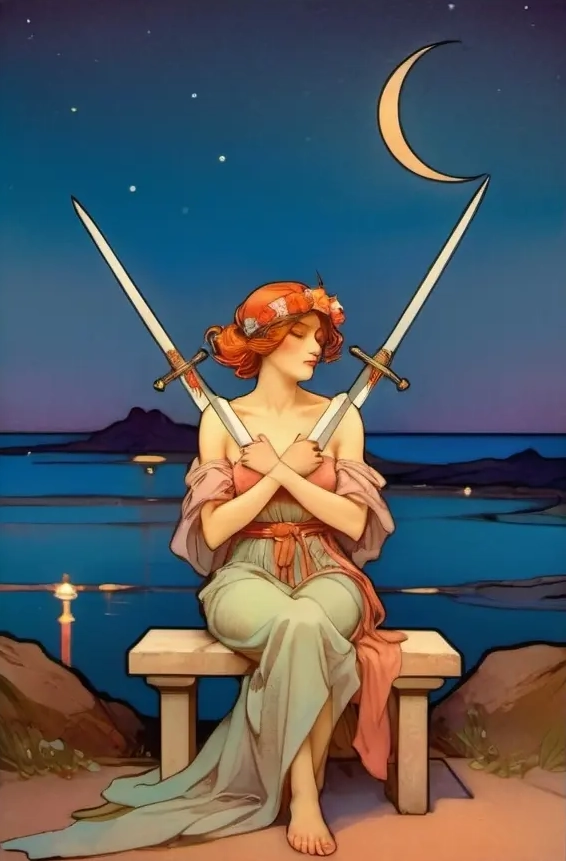
Pause and insight. Four of Swords plus High Priestess: rest before hidden knowledge surfaces, or intuition that needs quiet.
Ambition and conflict. Three of Wands plus Five of Wands: growth attracts competition, or expansion that needs clearer boundaries.
Integration after mess. Temperance plus Star: slow repair with hope that is practical, not performative.
Say each pair aloud with your question attached. If the sentence lands in your body, keep it. If it stays flat, look again before you add more cards.
Position and reversal change the pair
The same two cards read differently in "what helps" versus "what blocks." Combining tarot cards without position is like quoting half a dialogue.
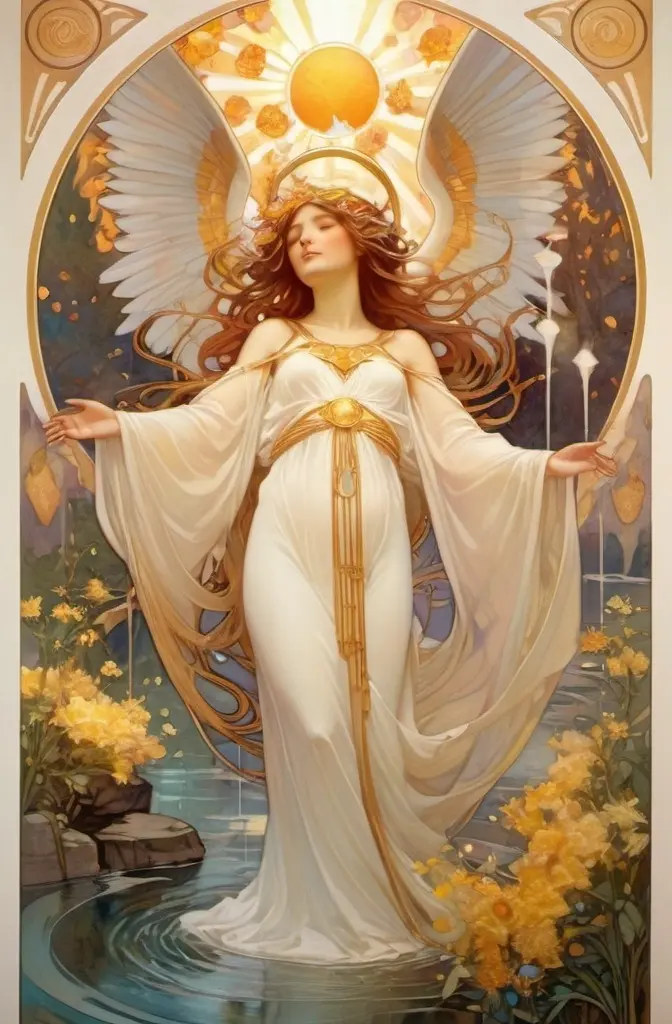
Reversals bend the pair too. Upright Sun with upright Three of Cups may show open joy and community. Sun reversed with Three of Cups might show celebration with fatigue underneath, or connection you want but resist showing. Reversal is often delay, interiority, or excess, not an opposite dictionary. The reversal guide linked above goes deeper without turning every pair into a horror story.
When one card is reversed and its neighbor is upright, ask whether the bent energy stays private, leaks sideways, or finally moves once the upright card's theme activates.
Common mistakes when combining tarot cards
Keyword stacking. "Love, fire, change, money" is not a combination. It is four tabs open in your brain.
Ignoring the weakest card. The quiet card sometimes carries the answer. A single pentacles card in a cups storm may say stabilize Tuesday before you decode the drama.
Chasing cookbook combos. Memorized pairs help as training wheels. Life will invent pairs your book never listed. Trust the sentence test more than the appendix.
Pulling until the pair looks nicer. That trains anxiety. Write the first honest sentence even if you dislike it.
Treating majors as always louder. A sharp minor in the right seat can steer the whole spread. Respect the row.
A practice spread for tarot card combinations
Pull three cards with labels:
- Theme: what energy is active?
- Modifier: what changes or sharpens the theme?
- Outcome: where the pair points if you engage honestly?
Read card two as modifier of card one, not as a separate topic. Read card three as the row's closing line. Journal one sentence. Pull again tomorrow on a calmer question if you spiraled.
For spread structure and position ideas, stay with the three card tarot spread guide. For picture-first discipline, keep returning to look before you interpret.
Where TarotGo fits
TarotGo is built for study that survives real life: pull a card, open its page, see neighbors in a spread, and return when you can read pairs without panic. Tarot card combinations become muscle memory when you name one honest sentence per pair, respect suit mix, and let majors set scale without erasing minors.
Start with two cards. Link them in plain language. Let the third card answer back. That rhythm turns reading tarot pairs from a trick into a conversation you can trust on ordinary days, not only in crisis pulls.