A marriage tarot reading sits in a different emotional room than a casual crush pull. You are not only asking if someone likes you back. You are asking about vows, timing, family, money, in-laws, and the quiet Tuesday nights that outlast the wedding photos.
People search wedding tarot and tarot for marriage when the heart wants a date and a name. Tarot works better when you ask about readiness, alignment, and the path two people are actually walking. A good marriage tarot reading leaves you with clearer questions for real life, not a fantasy spouse picked from a deck.
This guide walks through seven cards that show up often when commitment is on the table. None of them is a verdict on its own. Together they help you read tarot future husband wife energy with honesty, without turning the cards into a census of who you will marry.
Before you pull: name the marriage question you mean
"Marriage tarot reading" sounds like one topic. Under it you might be asking:
- Will my partner propose or move toward marriage?
- Are we ready for legal commitment, or is one of us rushing?
- What blocks a wedding we both say we want?
- Is marriage wise with this person, even if love is real?
- What does long-term partnership look like if we stay on this path?
Those are different lanes. Tarot for marriage reads cleaner when you pick one.
Try reframing:
- "What is the emotional truth of our commitment right now?"
- "What does each of us need before marriage would feel grounded, not forced?"
- "What is the most likely direction of this partnership in the next year?"
- "What would help me choose partnership with clarity, not panic?"
A tight question keeps the spread from becoming a wedding fantasy machine. For wider relationship tone, pair this guide with love tarot reading. If your question is still about whether someone new is coming, see future love tarot before you jump to altar language.
For a fast frame, borrow three positions from the three-card tarot spread:
- You (your truth about commitment right now)
- The partnership (what sits between you: love, fear, timing, habit)
- The path (what is most likely to unfold if nothing major shifts)
Read card two as tone, not as a hidden diary. You are mapping the partnership field, not wiretapping anyone's private thoughts.
If you are months into dating and marriage feels premature, the guide on new relationship tarot reading meets you where the bond is still forming. If you are chasing soulmate certainty, soulmate tarot covers destiny language without replacing honest conversation.
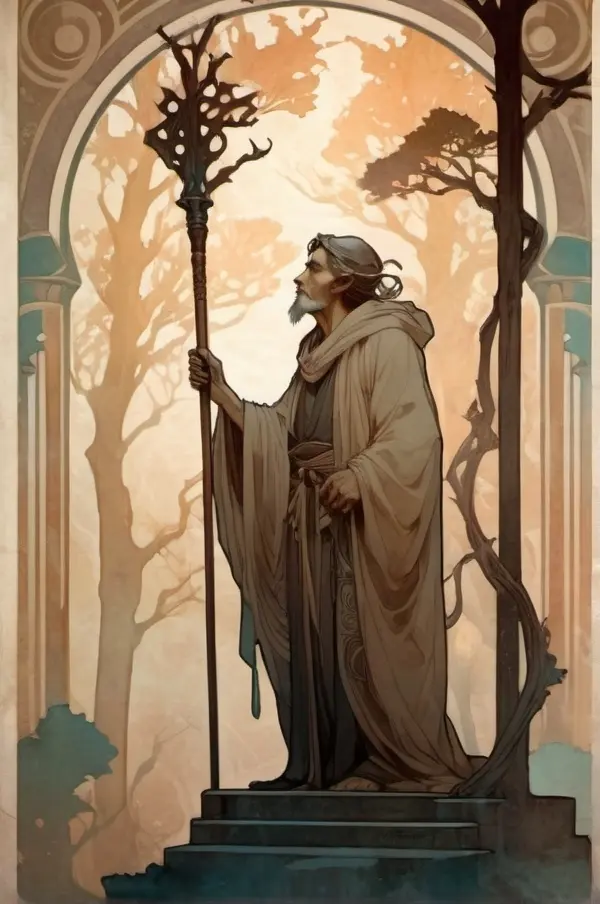
1. The Hierophant: commitment with structure
When The Hierophant appears in a marriage tarot reading, look at form first.
Two figures before an authority. Keys. Ritual. This card often points to official commitment: marriage, engagement, shared faith or values, the moment private love steps into public structure.
In wedding tarot spreads, The Hierophant can mean:
- marriage or formal partnership is in the conversation
- tradition, family, or community expectations shape the timeline
- you need clear agreements, not only chemistry
It does not promise a wedding date. It does not mean you must marry because the card showed up. It says structure matters in this reading. Something is asking to be named out loud.
Ask in your notes: "What would we need to agree on before vows would feel honest?" If the card is strong but nobody will define the relationship, trust the silence first. Then ask what the card is naming that you have not let yourself see.
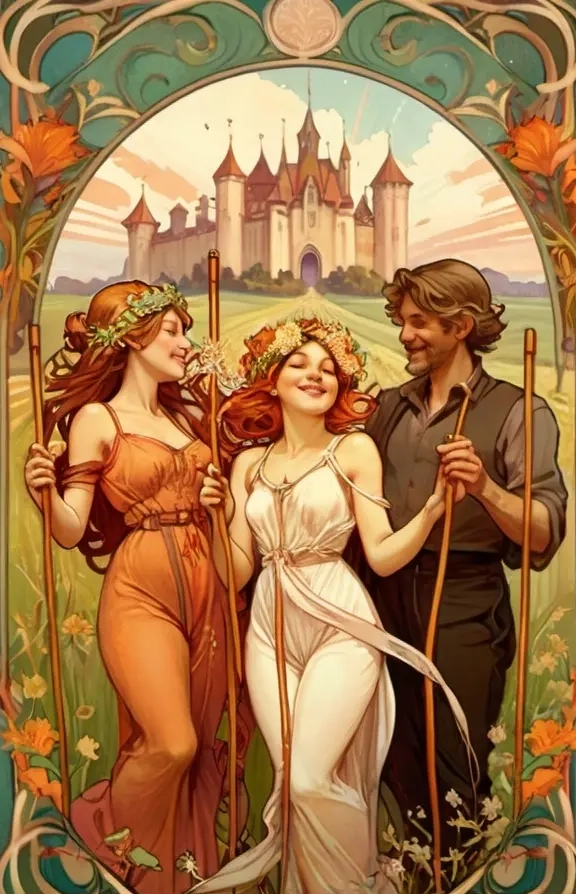
2. Four of Wands: celebration and the threshold
Four of Wands is the card people picture when they type wedding tarot into a search bar.
Garlands. Raised wands. A homecoming feeling. In tarot for marriage, Four of Wands often shows:
- celebration energy around the bond
- a milestone approaching: engagement, moving in, meeting family
- stability strong enough to invite witnesses
It is one of the clearest "joy in shared life" cards in a marriage tarot reading. It is not a guarantee the party happens on schedule. Four of Wands beside heavy swords might be "the celebration is real but the planning is stressful." Four of Wands beside Five of Cups might be "you are mourning an old version of the relationship while a new chapter waits."
Ask what celebration means in your actual life. A courthouse wedding? A big reception? Emotional safety after a hard year? Four of Wands reads differently depending on the life you are building.
3. The Lovers: choosing marriage, not only wanting it
The Lovers gets treated like a marriage certificate. In practice it is sharper than that.
This card is about alignment: values, desire, and the act of choosing. In a marriage tarot reading, The Lovers often shows:
- real pull toward partnership, not only habit
- a fork: deepen commitment or name what splits you
- love that touches something serious in both people
The Lovers can appear when marriage makes sense and when it would be a mistake driven by chemistry. You may love each other and still disagree on kids, money, or pace. You may feel depth and still fear the next step.
Read the picture around the card. Is the spread calm or tense? A Lovers card beside conflict cards reads differently than one beside steady cups. Context is the whole game.
4. Two of Cups: mutual readiness for partnership
When Two of Cups appears in tarot for marriage, look at balance first.
Two figures meet. Cups lift. Eye contact lands. This card often points to mutual feeling: not just your longing for vows, not just their charm, but something that meets in the middle.
In commitment spreads, Two of Cups can mean:
- emotional reciprocity strong enough to build on
- honesty starting to show about what you both want
- a bond that feels equal, not one-sided
It does not prove you will marry. It does not erase practical obstacles. It says the feeling lane is open on both sides, which matters when you are talking about long-term partnership.
Ask: "Where do we meet each other halfway in real life?" If the card is warm but one person avoids every talk about the future, trust behavior first.
5. Ten of Cups: the home you are trying to build
When people ask about tarot future husband wife life, they often want fireworks. Ten of Cups answers with something quieter and harder to fake.
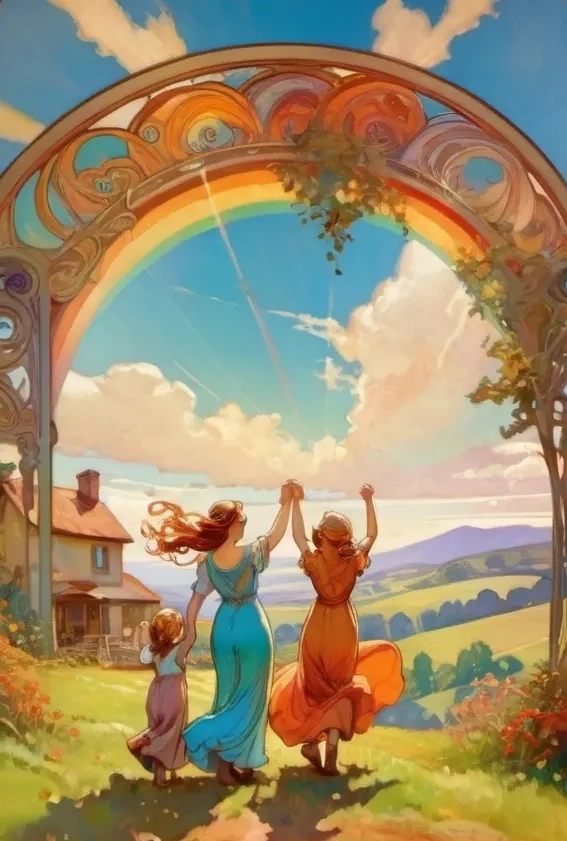
A rainbow over a home. Figures with arms raised. This card often points to emotional belonging: the kind of love that can live in ordinary Tuesdays, not only on anniversaries.
In marriage tarot reading spreads, Ten of Cups can mean:
- long-term harmony is possible here
- family, home, or shared life energy is in play
- the bond aims at peace, not only passion
It is not a guarantee. Ten of Cups beside heavy swords might be "the dream is real but the path is rough." Ten of Cups beside Four of Cups might be "the future you want exists, but someone is not looking up from the table."
Ask what home means to you in this reading. A shared apartment? Kids? Care for aging parents? Ten of Cups reads differently depending on the life you are actually building.
6. Justice: fairness, contracts, and the marriage you can live with
Justice is easy to skip in wedding tarot pulls because it is not romantic on the surface. For tarot for marriage, it is often the card that saves you from a beautiful mistake.
Scales. Sword. Clear sight. In commitment readings, Justice often shows:
- balance or imbalance in how you each show up
- legal or financial questions that need daylight
- the need for honest terms before vows
Justice beside warm cups might be "love is real and you still need a fair money talk." Justice beside The Devil might be "attraction is strong and something in the power dynamic is off."
7. Ten of Pentacles: legacy, family systems, and long years
When a marriage tarot reading asks about decades, not months, Ten of Pentacles shows up.
An archway. Generations. Wealth that is not only money but continuity. In long-term partnership spreads, Ten of Pentacles often means:
- building something that lasts beyond the first year
- family, property, or shared resources in the picture
- roots that connect you to a wider system, not only each other
It can describe the tarot future husband wife lane when the question is about stability, in-laws, children, or aging together. It can also warn you when you are marrying into a family story you have not examined.
Ten of Pentacles beside Five of Pentacles might be "the long view is possible but someone feels left out financially or emotionally." Ten of Pentacles beside The Tower might be "the legacy picture you inherited is about to change."
A three-card marriage spread for fast clarity
You do not need a huge layout for a useful marriage tarot reading. Pull one card per question:
- My heart on commitment (what is true in me right now?)
- The partnership (what is true between us about long-term life?)
- The wisest next step (what action or conversation would bring clarity?)
Read the row as one story. Where do cups gather? Where do swords cut through warmth? Where do pentacles slow things down with rent, debt, or family duty?
If card three is all motion and card two is still, your wedding tarot timeline may need patience more than a surprise proposal fantasy. If card two is bright and card three is heavy, ask what you are avoiding that the deck keeps naming.
This is the same discipline as the three-card tarot spread guide, just aimed at commitment. Positions change. The habit does not: describe, connect, then decide.
A seven-card commitment spread
When the question will not shrink, use seven positions. Pull one card each:
- What is my emotional truth about marriage with this person?
- What is their emotional truth about commitment (or the energy I am moving toward if single)?
- What is strong in our partnership foundation?
- What is strained or unspoken about long-term life?
- What blocks deeper commitment or a wedding timeline?
- What is the likely near-term direction of the partnership?
- What is my wisest move for my own heart and integrity?
Read the row as a story, not as seven separate verdicts. Three warm cups and one sword do not erase the sword. One Hierophant does not erase three cards that show fear or imbalance.
If you keep looping on whether someone is "the one" instead of whether you can build a life together, pause. Soulmate tarot and future love tarot apply the same discipline when the question is destiny language, not daily behavior.
Long-term partnership questions worth asking
Tarot for marriage works best when your questions respect what marriage actually is: a long cooperation under stress, not a single yes on one night.
Strong questions include:
- "What would need to be true in our behavior for marriage to feel grounded?"
- "What fear in me is shaping how I read commitment?"
- "What practical topic are we avoiding that the cards keep pointing toward?"
- "If we never married, what would I still need to know about this person?"
Weak questions include:
- "What is my future husband's name?"
- "Will I marry by next summer?"
- "Show me the face of my wife."
Tarot is bad at employee ID photos for the soul. It is good at naming tone, blocks, and the conversation you keep postponing.
After a marriage tarot reading, ask three grounding questions:
- What would I see in real life if this spread is accurate?
- What part of the reading is about my fear, not about them?
- What is one small action that would make me proud of myself regardless of outcome?
Future-telling without behavior is fantasy. Wedding tarot works when it sharpens your next step, not when it replaces it.
Ethical framing: insight, not spouse identity
People type tarot future husband wife when they want certainty about who and when. Ethical marriage tarot reading practice draws a line here.
Tarot can describe:
- readiness for commitment
- balance or imbalance in the bond
- family, money, or values pressure
- likely tone of the path if nothing shifts
Tarot cannot ethically replace:
- getting to know someone over time
- direct talks about marriage, kids, and money
- legal advice or therapy
- consent and choice from both people
If a reader or app promises to name your spouse from the deck, treat that as entertainment, not guidance. Your future partner is a person who chooses you back, not a card pulled at midnight.
The same rule applies when you read for yourself. Do not torture a spread until it prints the answer you already decided you want. Read once. Write it down. Compare it to what you see in calendars, bank accounts, and how you feel after a hard week together.
Warm cards, cold behavior
Tarot can name a commitment field. It cannot replace what someone does when you mention the future.
Hierophant plus Four of Wands plus Ten of Cups might describe a bond with real marriage potential and a partner who still will not define the relationship after two years. Justice might describe fairness and a conversation about money you both keep delaying. Ten of Pentacles might describe legacy and family pressure that nobody has named out loud.
Your job after the reading is small and hard: compare the spread to lived reality. If the cards say open-hearted partnership and they say "let's keep it casual" for another year, believe the year. If the cards say imbalance and they keep showing up with repair in hand, do not write the story off because one card scared you.
Marriage is not proved by the perfect pull. It is proved by what two people do with what they feel, including the boring talks about budgets and boundaries.
Practice the read without spiraling
A marriage tarot reading should leave you clearer, not more addicted to the next shuffle.
Pull once. Write the spread. Step away. Come back with fresh eyes. If you are asking the same wedding question every hour, the cards are not the missing tool. Your nervous system needs ground first.
TarotGo is built for that kind of practice: short spreads, card meanings you can study, and room to return when you are calm enough to read honestly. Open a marriage tarot reading when you want insight into commitment, not when you want the deck to outrun a conversation you are afraid to have.
Let the seven cards above sharpen your eyes. Then let real life, and your own courage, finish the sentence.