A new relationship tarot reading hits different from a long-term love tarot reading. You are not mapping a marriage yet. You are in the tender window: a few dates in, texts that feel electric, a label that has not landed, or a crush that might finally be mutual.
Early relationship tarot is not here to stamp "soulmate" on week two. It helps you read tone: what is open, what is rushed, what is performative, what might actually grow if you stop guessing from every emoji.
This guide covers spreads for tarot for new love, green and red flags the deck often names, pacing questions, and seven cards that show up when people ask about fresh bonds. None of them is a courtroom verdict. Together they help you date with clearer eyes and less midnight shuffling.

Before you pull: name what "new" means
"New relationship tarot" sounds like one topic. Under it you might be asking:
- Is this connection real or mostly my hope?
- Are we moving too fast or too slow?
- What are they actually offering, beneath the charm?
- Should I define this, or give it more time?
- Am I ignoring a red flag because the chemistry is loud?
Those are different lanes. Dating tarot reads cleaner when you pick one.
Try reframing:
- "What is the emotional truth of this bond at this early stage?"
- "What pace would serve both of us, not only my anxiety?"
- "What green flag is real here, and what am I inventing?"
- "What would I need to see in behavior this month for this reading to be accurate?"
A tight question keeps the spread from becoming a mood machine. For a wider map of love beyond the honeymoon phase, see love tarot reading. If your ache is specifically about his heart right now, does he love me tarot cards goes deeper. If you keep wondering whether you live in their head, is he thinking about me tarot names that lane without pretending the deck can wiretap anyone.
A three-card spread for early dating
You do not need a huge layout for useful tarot for new love. Pull one card per position:
- Where I am (my emotional truth, hopes, and blind spots)
- Where the connection is (tone between you: chemistry, distance, mixed signals)
- The wisest next step (one action, conversation, or boundary that brings clarity)
Read the row as one story. Warm cups in position two with a sword in position three might mean "the feeling is real, but you need a direct talk before you spiral." A knight in position two with Four of Cups in position three might mean "they are pursuing, but you are numb or guarded for good reason."
This is the same discipline as the three-card tarot spread guide: describe the scene, connect the cards, then decide. Positions change. The habit does not.
If you want to zoom out on where romance might be heading in a few months, pair this pull with future love tarot. Early dating tarot is about now and next. Future love tarot is about direction. Both help. They answer different questions.
A five-card new relationship spread
When the question will not shrink, use five positions. Pull one card each:
- My heart (what I want and what I fear)
- Their energy (how they show up, not a hidden diary)
- What is growing (green-flag lane)
- What needs honesty (strain, avoidance, or red-flag lane)
- Recommended pace (lean in, slow down, or name a boundary)
Read card four without flinching. New love readings fail when people treat card three like a wedding invitation and pretend card four was a shuffle error.
Card five is your pacing card. Temperance, Eight of Wands, and Four of Wands often land here. Eight of Wands can mean momentum is real. Temperance can mean "beautiful connection, do not rush the label." Four of Wands can mean celebration is possible, but check whether you have met each other's real life yet.
Write one sentence after the spread: "If this is accurate, what would I see on our next three dates?" Let reality grade the cards.
Green flags the deck often names
Green flags in early relationship tarot are not "everything is perfect." They are signs the emotional lane is open and mutual effort exists.
Two of Cups is the classic mutual card. Two figures meet. Cups lift. Eye contact lands. In dating tarot, it often points to real reciprocity: you are not the only one initiating, remembering, or hoping.
Ace of Cups can show a fresh emotional opening: tenderness, honesty starting to spill, the sense that something new is being offered. It does not promise forever. It says the heart door is ajar.
Three of Cups can mean easy social chemistry, laughter, friends approving, or simply joy in the early phase. Read the scene. Sometimes it also names a crowded emotional field (an ex still orbiting, a friend group that knows too much). Context is the game.
Knight of Cups often shows romance in motion: compliments, dates, poetic energy, someone willing to pursue with feeling. The shadow is charm without follow-through. A green Knight of Cups is gesture and consistency across weeks.
The Lovers in a new bond is less "marriage tomorrow" and more alignment: values, desire, and the act of choosing each other with eyes open. It can appear when chemistry is real and you are at a fork: deepen or admit what does not fit.
When green cards cluster, ask what behavior matches them. Tarot names a field. People prove it on Tuesday.

Red flags worth taking seriously
New relationship tarot is not doom scrolling. It is pattern recognition before your nervous system signs a lease on fantasy.
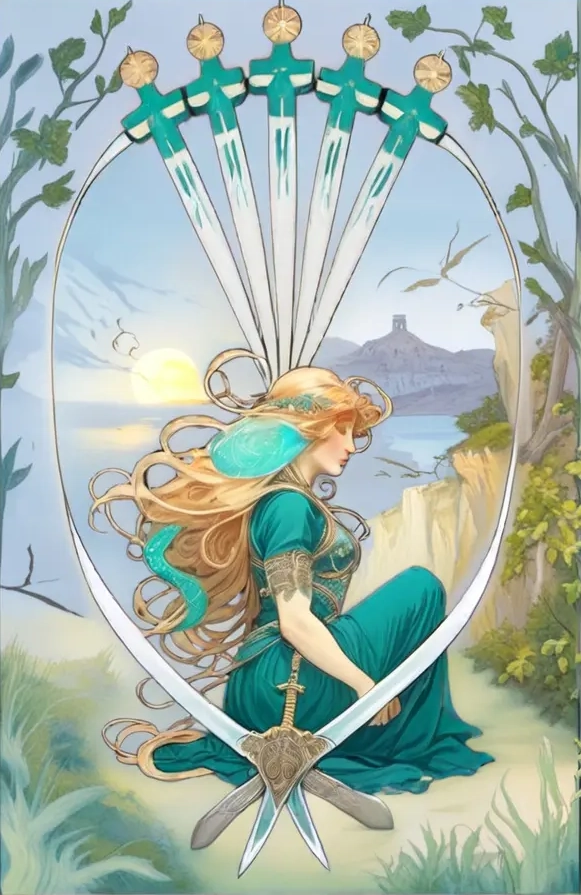
Seven of Swords can point to omission, half-truths, or stories that do not add up. In early dating, it might be "they are charming, but something is kept off the table." Compare the card to facts you can verify.
The Devil can name obsession, jealousy games, or a bond that feels magnetic and trapping at once. Chemistry is not always healthy chemistry. If this card sits beside strong cups, ask what you are ignoring because it feels too good to stop.
Knight of Swords can show rush, sharp words, or pursuit that skims past emotional depth. Fast is not always sincere. Sometimes it is performance.
Five of Cups in a brand-new bond might mean you are already mourning what you hoped this would be, or disappointment arrived before the relationship earned its name. That is data.
Eight of Cups can mean one person is already emotionally walking away while the other is still planning the next date. Painful in week three. Still useful.
One red card does not end the story. Three red cards beside cold behavior might. Read the spread as a whole. Then read your calendar. If they cancel twice, hide you on social media, and never ask a real question about your life, the deck did not need to swear an oath. You already know.
Pacing: when to slow down or lean in
The hardest part of early relationship tarot is not "do they like me?" It is timing.
Temperance is the patron saint of sane pacing. Angel between cups, foot in water, foot on land. In new love spreads, Temperance often says: blend, do not flood. Enjoy the connection without forcing a label to calm your anxiety.
Eight of Wands is the opposite energy: messages flying, dates stacking, momentum like a runaway train. Sometimes that is joy. Sometimes it is love-bombing. Ask whether speed comes with reliability, or only with intensity.
Four of Wands can celebrate stability and "we are building something." Early on, it might be premature, or it might mean you both feel safe faster than usual. Pair it with pentacles cards. Celebration plus practical follow-through reads differently than celebration plus evasive answers.
The Hermit in a new bond can mean one person needs space to know their own mind. That is not always rejection. It can also mean you are dating someone who cannot meet you while they are closed in their cave.
After you pull a pacing card, ask: "What pace would I be proud of in six months?" Anxiety wants to rush or freeze. Temperance wants a third option: steady.
Seven cards that show up in tarot for new love
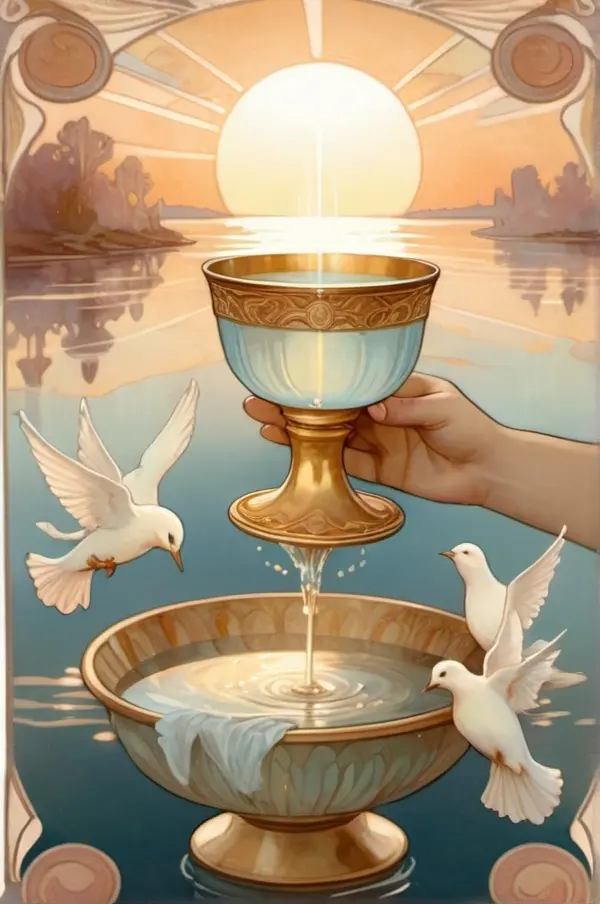
Ace of Cups: the opening
When Ace of Cups appears in tarot for new love, look for emotional birth: a new offer of care, a crush becoming speakable, tenderness you were not sure would return after the last heartbreak.
It can also warn you not to pour the whole chalice on date two. An ace is a beginning, not a finished house.
Page of Cups: shy sincerity
Page of Cups brings small, sincere gestures: a thoughtful text, a vulnerable share, curiosity about your inner life. In dating tarot, the Page can mean someone is learning how to love you, not performing a finished partner.
The shadow is immaturity or hot-and-cold flirting. Read whether the Page grows into steadier cards over time, or stays a cute message with no plans behind it.
Knight of Cups: romance in motion
We touched this above because it shows up constantly in new relationship tarot. The Knight rides in with feeling on his sleeve. Green when dates and words match across weeks. Yellow when the poetry stops the moment you ask for clarity.
Three of Cups: spark and social ease
Three of Cups is the "we have fun together" card. For early dating, that matters. Long-term love without laughter is a long meeting. Just notice who else is in the picture. Three figures means the story is never only two people.
The Lovers: choice, not fantasy
The Lovers again, because new couples misread it as a guarantee. In truth it asks: do you choose each other for real reasons, or because loneliness is loud? It can show up when the bond is mutual and serious. It can also show up when you must pick between two paths: this person, or the version of you that knows better.
If you are already typing "soulmate" in your notes, pause. Soulmate tarot explores that word with more nuance than a honeymoon spread should carry.
Two of Cups: reciprocity you can test
The most practical green card in early relationship tarot. Do they initiate? Do they remember what matters? Do they meet you halfway when plans get messy? Two of Cups beside Seven of Swords is a classic "chemistry yes, honesty unclear" read. Trust the sword until the cups prove themselves in behavior.
Temperance: the pace you can live with
We return to Temperance because new love lives or dies on pacing. If your spread is all wands and no temperance, you might be burning bright without building anything. If temperance dominates, you might need to enjoy the slow brew instead of forcing a definition to soothe fear.
What to ask in early relationship tarot
Strong questions beat "will this work?" every time. Try:
- What is the emotional truth of this connection right now?
- What is growing between us that I should nurture?
- What am I overlooking because chemistry is loud?
- What pace would honor both my hope and my self-respect?
- What boundary would make the next month clearer, win or lose?
- How does this person show care in action, not only in words?
- What would a wise version of me do before the next date?
Weak questions invite weak readings:
- Will they marry me? (too far, too fixed)
- Are we soulmates? (loads fantasy onto thin data)
- Should I text them again? (too small for a spread. Trust your dignity)
- Do they love me? (sometimes fair, but narrow. See the dedicated guide if that is the whole ache)
Write your question once. Pull once. If you need a single-card check-in on a busy week, borrow the discipline from three-card tarot spread and stop at three.
Warm cards, cold behavior
Tarot can name a feeling field. It cannot replace what someone does on a Wednesday.
Two of Cups plus Ace of Cups plus Knight of Cups might describe a bond with real potential and a partner who still will not introduce you to a single friend. Temperance might describe healthy pacing and a timeline slower than your friends think is normal. Seven of Swords might describe a gap in the story or your own paranoia from an old wound.
Your job after the reading is small and hard: compare the spread to lived reality. If the cards say open-hearted and they say "let's keep it casual" while acting possessive, believe the possessiveness and the casual label together. If the cards say strain and they keep showing up with repair in hand, do not write the story off because one pull scared you.
New relationship tarot works when it sharpens your next step, not when it replaces a conversation you are afraid to have.
Practice the read without spiraling
A new relationship tarot reading should leave you clearer, not addicted to the next shuffle.
Pull once. Write the spread. Step away. Come back with fresh eyes. If you are asking the same "are we okay?" question every hour, the cards are not the missing tool. Your nervous system needs ground first.
TarotGo is built for that kind of practice: short spreads, card meanings you can study, and room to return when you are calm enough to read honestly. Open an early relationship tarot pull when you want insight into tone and pace, not when you want the deck to outrun a boundary you already know you need.
Let the spreads above sharpen your eyes. Then let real dates, real words, and your own courage finish the sentence.