"Is he cheating?" is one of the loneliest questions you can type into a search bar at midnight, phone brightness turned down so it doesn't wake anyone, already half-hoping a deck of cards can look him in the eye for you.
It can't. No spread reads his phone or follows his car. What an is he cheating tarot reading can do is narrower, and still worth something if you use it honestly: it can help you name what you already feel and separate real red flags from the anxious static that gets loud once a relationship starts to shake.
This guide walks through seven cards that tend to appear in an is he cheating tarot reading when the real question underneath is about secrecy, distance, or guilt. It includes a five-card infidelity tarot spread built for clarity, not proof, and it ends with the part most tarot guides skip: when to stop shuffling and start talking.
What this reading can actually tell you
Tarot is good at reading emotional weather: distance, guilt, secrecy, longing, relief. It is not good at reading facts it has no access to, like what is on someone's phone. A card cannot confirm an affair any more than a horoscope can confirm a car accident.
What the cards can do is hold up a mirror to the atmosphere you're already sensing. If something in the relationship feels closed off or off-key, tarot can help you look at that directly instead of pushing it down. Just don't mistake a mirror for a microphone hidden in his coat pocket.
Keep this signs of cheating tarot reading in the category of self-reflection, not detective work. The goal is to leave calmer, not to gather "evidence" you plan to present at 2 a.m.
Name what you're actually asking
"Is he cheating?" sounds like one question. Underneath it, people are usually asking one of these instead:
- Is there something he's hiding from me?
- Has he already emotionally left this relationship?
- Am I picking up on something real, or am I just scared?
- What do I do with the distance I already feel?
Those are different lanes, and tarot reads better when you pick one before you shuffle. If what you're really circling is whether he still loves you at all, the guide on does he love me? seven tarot cards that reveal true feelings works better for that question than this one does. If the ache is really about a gap that's already open between you, silence, distance, a fight neither of you has named, does he miss me tarot reads that longing without turning it into an accusation.
Try a sharper question than "is he cheating":
- "What is the current honesty level between us?"
- "What am I sensing that I haven't let myself look at?"
- "What do I need to see clearly before I can move forward?"
A tight question keeps the reading from becoming a script for your worst fear.
1. Seven of Swords: something is being carried out quietly
A figure sneaks off with a bundle of swords under one arm, leaving one or two behind. No confrontation. No announcement. Just a quiet exit with something that isn't fully theirs to take.
In an is he cheating tarot reading, Seven of Swords is the card people brace for. It's worth reading carefully rather than reacting to on sight.
This card points to:
- something is being kept from you, though not necessarily an affair
- he may be managing a private matter clumsily, or avoiding a conversation he doesn't want to have yet
- secrecy is present in the pattern, but its size and shape aren't spelled out by this card alone
Seven of Swords can describe an affair. It can also describe a surprise trip, a financial mess he's embarrassed about, or a friendship he doesn't know how to explain. The card names concealment. It does not name what's concealed. Notice where the secrecy sits: about you, or about him and something separate from the relationship entirely?
2. The Moon: things aren't as clear as they look
A path winds between two towers under a full moon, a dog and a wolf howling at the light, a creature climbing out of the water below. Everything is visible and nothing is quite trustworthy.
The Moon in this kind of reading usually means:
- something in the situation isn't fully visible to you right now
- your gut may be picking up on something real, or it may be amplifying old fears from a different relationship
- clarity feels far away, and that distance is itself worth noticing
The hardest part of The Moon is that it doesn't tell you which read is correct. It just confirms that you're not seeing the whole picture yet, and that guessing at the missing pieces will probably lead you somewhere shaky. If you keep pulling this card night after night, that's a sign you need more real information, not more cards.

3. Three of Swords: pain that already has a name
Three swords pierce a heart against a grey sky, rain falling behind it. There's no ambiguity in this image. Something hurts.
When Three of Swords shows up in a reading about a possible affair, it often means:
- grief or betrayal is already living in you, whether or not you've confirmed a cause
- something painful has already registered: a discovery, a slip, a comment, a hunch you can't unfeel
- the card is naming the hurt. It is not verifying what caused it
Three of Swords can appear because he did something. It can also appear because an old wound from a past relationship got reopened by his behavior now. Ask plainly: what specifically hurt, and when did it start? A vague, free-floating ache points one way. A clear memory of a lie you caught points another.
4. The Devil: bound by something that isn't love
Two figures stand chained beneath a horned, winged figure, though the chains around their necks are loose enough to slip off if they chose to. They don't move.
The Devil in an infidelity reading often points to:
- an unhealthy attachment somewhere in the picture, his to someone or something else, or yours to a relationship you're staying in out of fear rather than choice
- compulsive secrecy or a pattern that repeats itself even when it causes damage
- staying for reasons that have stopped being about love: habit, comfort, fear of starting over
Ask whose chains the card is describing. Sometimes it's him: a temptation he hasn't been honest about, an old pattern he keeps repeating. Sometimes it's you: a relationship you already know isn't working, held onto because leaving feels harder than staying. Neither reading is comfortable, and that's often exactly why the card shows up.
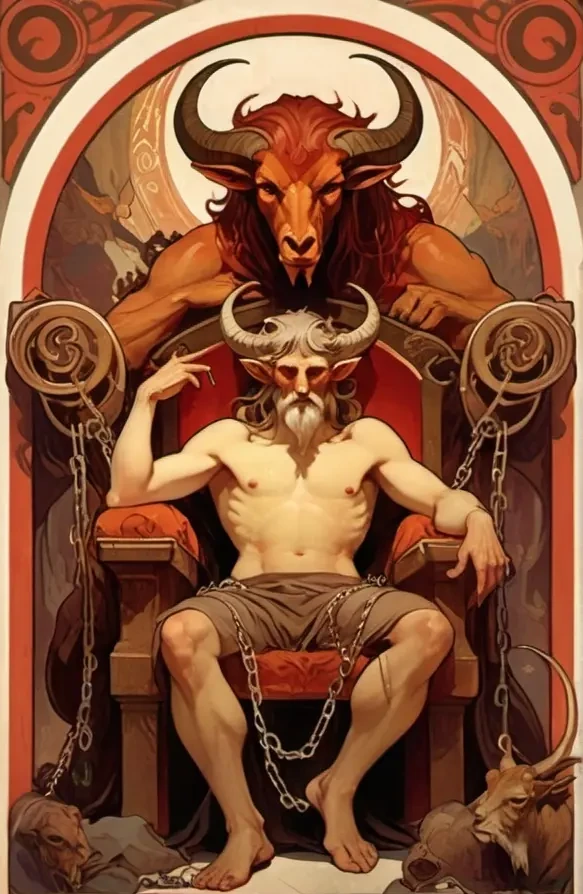
5. Two of Cups: check whether the exchange still runs both ways
Two figures face each other, cups raised, an even trade of affection passing between them. This is normally one of the warmest cards in the deck.
In a reading about a possible affair, Two of Cups asks a specific question: does the emotional exchange between you two still run both ways, or has it quietly become one-sided?
- when it appears warm and balanced, it may be describing your feelings toward him, not necessarily proof of his toward you
- if the card looks sweet but the real exchange in your relationship feels lopsided, that mismatch is itself useful information
- Two of Cups next to Seven of Swords describes affection sitting right beside concealment. That's a strange, sad combination, not a contradiction that cancels itself out
For more on how a blocked or reversed version of a card like this shifts the meaning, the guide on reversed tarot cards covers how a card's gift can be present but not flowing cleanly, which is often exactly what a strained Two of Cups is showing you.
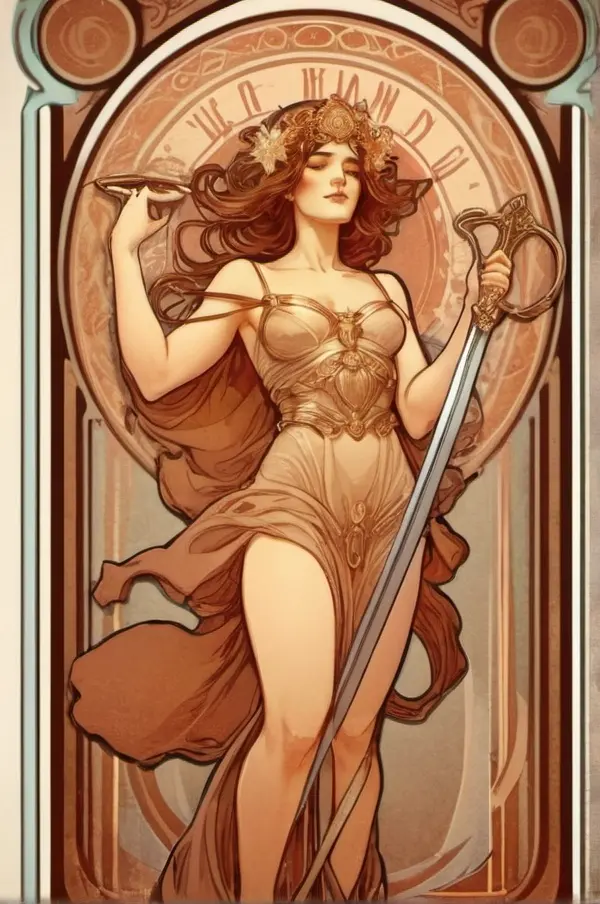
6. Justice: cause and effect, not a verdict
A robed figure holds a sword upright in one hand and a balanced scale in the other. Nothing tips too far in either direction. Truth, not drama, is the point.
Justice in this kind of spread usually means:
- actions carry consequences, and truth tends to surface given enough time
- a reckoning may be approaching, in the relationship or in your own thinking about it
- you may need clear-eyed judgment right now more than hope or panic
Justice doesn't gossip and it doesn't name names. It says balance is coming, one way or another. That's unsatisfying when you want an answer tonight, and it's also often the most honest card in the spread: it tells you clarity is closer than it feels, without pretending to hand it to you early.
7. Nine of Swords: check whose fear this is
A figure sits upright in bed at night, face in their hands. Nine swords hang on the wall behind them. This is the 3 a.m. card, the one that shows up when a mind won't stop replaying the worst version of events.
In an is he cheating tarot spread, Nine of Swords can point to:
- his guilt, if he's carrying something he hasn't told you
- but more often, in this particular question, it describes your own nervous system running the worst case on a loop
- sleeplessness, catastrophizing, a mind that has stopped being able to tell a real threat from an imagined one
This card is the hinge of the whole reading. Before you take it as proof of anything, ask directly: is this describing him, or is it describing me right now? Only one of those answers is something the cards can actually confirm.
A 5-card spread for clarity, not proof
This layout won't tell you whether he's cheating. It's built to get you out of the loop and into a clearer read on where you stand. Pull one card per position:
- What I am genuinely feeling right now, underneath the panic
- What is real and unclear in this relationship, something I don't yet have facts about
- What is my own fear talking, not this relationship specifically
- What behavior have I actually witnessed, not imagined or been told secondhand
- What I need to do next for my own clarity and peace
Positions 3 and 4 do the heavy lifting here. Without them, this spread turns into a machine for confirming whatever you already fear. With them, you get an honest split: here is what my anxiety is doing, and here is what I have genuinely seen with my own eyes. Those are rarely the same size.
Telling anxiety from a real red flag
This is the part most cheating-tarot content skips, and it matters more than any single card.
Anxiety tends to look like this: checking his phone screen when it lights up, googling his name at 1 a.m., replaying a neutral comment until it sounds sinister, needing reassurance that fades within the hour. It often has a history that predates him, an old betrayal, a parent who lied, an ex who cheated and never got caught. It attaches to small, ambiguous things and inflates them.
A real red flag looks different: a pattern that repeats rather than one odd night, a story that changes on a second telling, defensiveness disproportionate to a mild question, a discovered lie about something concrete (where he was, who he was with), unavailability that has quietly become normal. Real red flags are specific and repeatable, not vague and atmospheric.
If your worry is free-floating and shows up regardless of what he does, that deserves its own attention, with or without cards in your hand. If it's anchored to specific, repeated, verifiable events, the cards aren't the tool you need anymore. Your own memory already has the answer.
Why tarot cannot confirm cheating, and what to do instead
Tarot reads emotional and energetic patterns. It cannot see a phone screen, a location, or a conversation that happened without you. Any reading that claims to name the other person, the hotel, or the exact date is telling you a story your own anxiety wrote, not something the cards actually contain.
There's also a quieter problem worth naming: a reading about someone else's fidelity reflects your own state of mind as much as anything external. Shuffle in a panic and you'll likely read panic back into the cards. That loop can feel like confirmation. It's actually just an echo.
So don't use tarot as surveillance. Don't pull a new spread every time he's ten minutes late, and don't treat a hard card as permission to go through his phone. That path rarely brings peace, it usually just adds a second source of shame on top of the first fear.
What works instead: trust real evidence over interpretation. Patterns witnessed over weeks matter more than any single card. Have the direct conversation. Say plainly what you've noticed, then watch the answer for consistency over time. If the fear existed before him, give it its own attention, maybe therapy, maybe honest journaling, so it stops running the show in every relationship after this one.
If the conversation confirms the worst, you don't need the cards to grieve well. The guide on breakup tarot reading is built for exactly that stage, processing what happened and figuring out your next honest step.
Practice the read without spiraling
A reading about trust should leave you steadier, not locked into checking and re-checking a fear that never quite settles.
Pull once. Write down what came up. Step away before you decide what it means. If you catch yourself pulling the same is he cheating tarot question every night, that's not a sign you need a better spread. It's a sign your nervous system needs rest, and probably a real conversation, more than it needs another card.
TarotGo is built for that kind of practice: short spreads, card meanings you can study without spiraling, and a journal to compare what the cards said with what actually happened. Use it to get honest with yourself, not to build a case.
Tarot can name the fear in the room. It cannot walk into the next room and find out the truth for you. That part still belongs to a real conversation, and to you.