Tarot for self-reflection is not about finding out what happens next. It is about pulling a card and asking what you are not letting yourself see right now. The reading works less like a forecast and more like a mirror. You show up, look at the image in front of you, and notice what it stirs before you reach for the traditional meaning. This guide covers what "presence over prediction" means in practice, a one-card journaling method, questions you can ask any card no matter its usual keyword, how avoidance quietly shows up in a reading, and how this differs from asking tarot to predict an outcome.
What presence over prediction means in practice
A prediction question wants a timeline. Will he call. Will I get the raise. Is this the year I meet someone. Those questions ask the cards to do something they cannot honestly do, which is see a future that has not been decided yet.
A presence question wants a mirror instead. What am I not looking at. Where have I been avoiding my own feelings about this. What do I already know and keep talking myself out of. The card in front of you is the same either way. The question you bring to it changes what you can actually use it for.
That is the shift using tarot as a mirror is built on. The deck reflects your interior state back at you instead of telling your fortune. This is honest work, not magic, and it is worth saying plainly: a card cannot guarantee an outcome. What it can do is hand you an image sharp enough to notice a pattern you already half knew was there.
The reading that started as a mirror, not a forecast
I did not go to that hard conversation to fix anything. I went so I would not be blindsided later, and because avoiding it had already cost me a week of imagining the worst version of what the other person might be thinking. Tarot works on the same instinct. Each time you pull a card and actually look at it, instead of skimming for a yes or no, you are practicing the version of showing up a reading can offer.

The Page of Cups is a fitting place to start, since the whole practice begins with something close to his stance. Not confidence that you will like the answer. Just enough curiosity to look at what is actually in the cup before deciding what it means.
A reading like this does not have to rearrange the outside world to be worth the time. Often it rearranges the inside one first, sorting what you are afraid of from what you already suspect, and separating your own read on a situation from the version someone else's opinion has been running in your head.
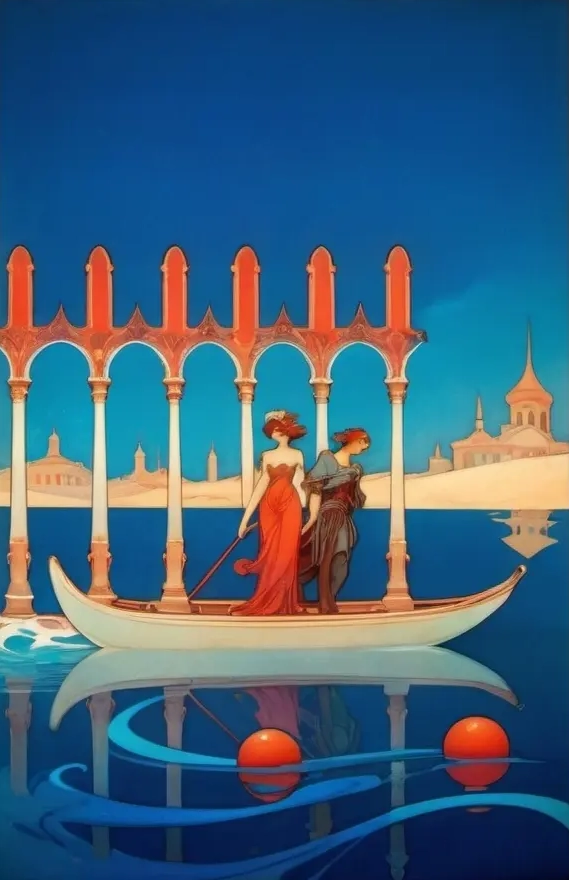
The Six of Swords shows up often in this kind of reflection. Not because it predicts a literal move, but because it names a shift in vantage point. You are not at the calm water yet. You are pointed toward it instead of standing on the old shore replaying the same wave.
Avoidance has its own card too.
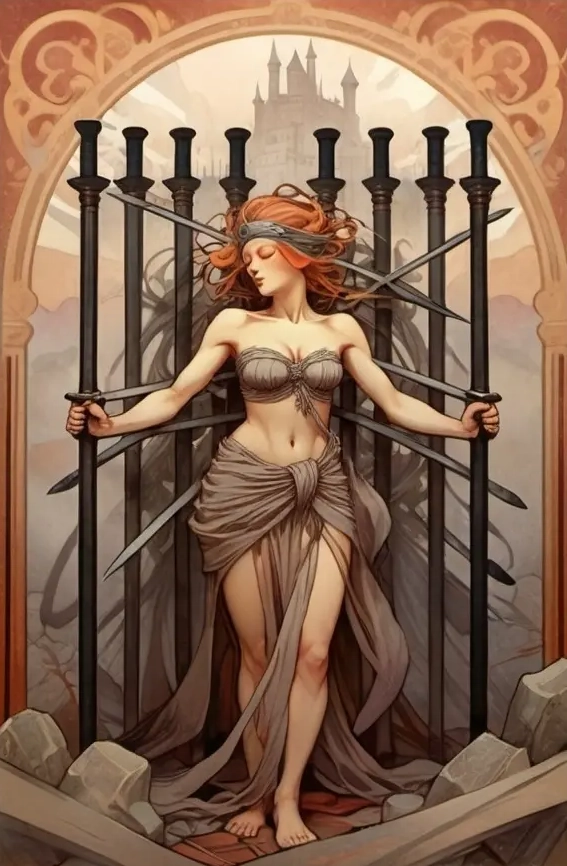
The Eight of Swords shows a figure bound and blindfolded, standing among swords that, on a closer look, leave more space to move than they first suggest. When a reading turns up something like this, the honest question is not "is this true." It is "have I been the one holding the blindfold."
None of this requires the cards to be right about tomorrow. It requires you to be willing to look today.

The Two of Swords is that pause before you choose. It is not the swords that matter here. It is the moment right before you decide to lower the blindfold, which is the moment a reflective reading is actually built around.
A one-card reflection method you can do in five minutes
You do not need a full spread to make tarot work as a mirror. One card, read slowly, does more than three cards read fast. Try this the next time you sit down with the deck:
- Name what is actually on your mind, in one honest sentence. Not "what does the universe want for me," but the real thing, even if it is small or embarrassing.
- Shuffle while holding that sentence loosely. You are not trying to force a specific card. You are just keeping the question present while your hands are busy.
- Pull one card and look at the image first, before you recall what it "means." Notice color, posture, what the figure is doing or avoiding doing.
- Write for three to five minutes on what the image brings up, separate from the keyword you already associate with it.
- Close with one plain question, something like "what is this card actually pointing at in my week."
This is the same discipline behind a good daily tarot reading: a small, honest question beats a big, foggy one, and a single card you actually sit with beats five cards you skim.
Five questions to ask any card
The traditional meaning of a card is a starting point, not the whole conversation. These questions work on almost any card you pull, regardless of what the guidebook says it means:
- What does this image make me feel, before I look up what it is supposed to mean?
- What am I avoiding admitting to myself right now?
- If this card were a mood I have already had this week, when did I feel it?
- What would I do differently if I already knew this were true?
- What is one small, honest action this card is nudging me toward?
Sit with whichever question lands hardest. That discomfort is usually the most useful part of the reading, more useful than a clean interpretation would have been.
How avoidance shows up in a reading
Avoidance rarely looks dramatic. It looks like small, quiet habits that keep the reading from actually reflecting anything back.
You reshuffle until a "nicer" card turns up, then treat that one as the real answer. You look at a card, decide "that is not me," and move on without asking why it landed uncomfortably. You draw again immediately after something unsettling, hoping the second card will cancel out the first. You ask the same question five different ways in one sitting, hunting for a phrasing that gets you the answer you already wanted.
Each of these is worth noticing on its own terms, separate from whatever the cards say. If you catch yourself reshuffling past a card you do not like, that reaction is information. It is often the same instinct that makes you skip a hard conversation or leave a message unread rather than deal with what it might say. The guide on what to do when a reading does not answer your question goes deeper into reading around a stuck or unclear draw instead of fighting it.
Self-reflection versus asking tarot to predict
Compare two ways of sitting down with the same situation.
Predicting: "Will he text me back." "Will I get this job." "Is this relationship going to work out." These questions ask the deck to see a future that has not been written yet, and any answer you get is a guess dressed up as certainty.
Reflecting: "What am I not seeing in how I have been handling this." "What do I actually want here, separate from what I think I am supposed to want." "What has my own behavior been telling me that I have not admitted out loud." Same situation, same deck, a different kind of answer, one you can actually act on this week instead of waiting to find out if it comes true.
Tarot for self-reflection is not a weaker version of fortune telling. It is a more honest use of the tool. A card cannot promise you a text message. It can help you notice that you already know what you want to say, and that the waiting has more to do with fear than with the deck.
Building a reflective practice
One reading will not rewire a pattern you have carried for years. What actually shifts something is returning, the same way a self-love tarot reading works better as a repeated check-in than a one-time verdict. Shorter loops of honesty, spaced out over weeks, do more than a single dramatic reading ever will.
Keep it small. Pull one card. Look at it before you name it. Ask one of the questions above, and let the answer be a little uncomfortable if that is where it goes. TarotGo is built for that kind of return: quick single-card pulls, meanings you can actually study, and a place to come back to when you want a mirror instead of a headline about your future. Show up. Let the card look back. Most weeks, that exchange is the whole practice.